
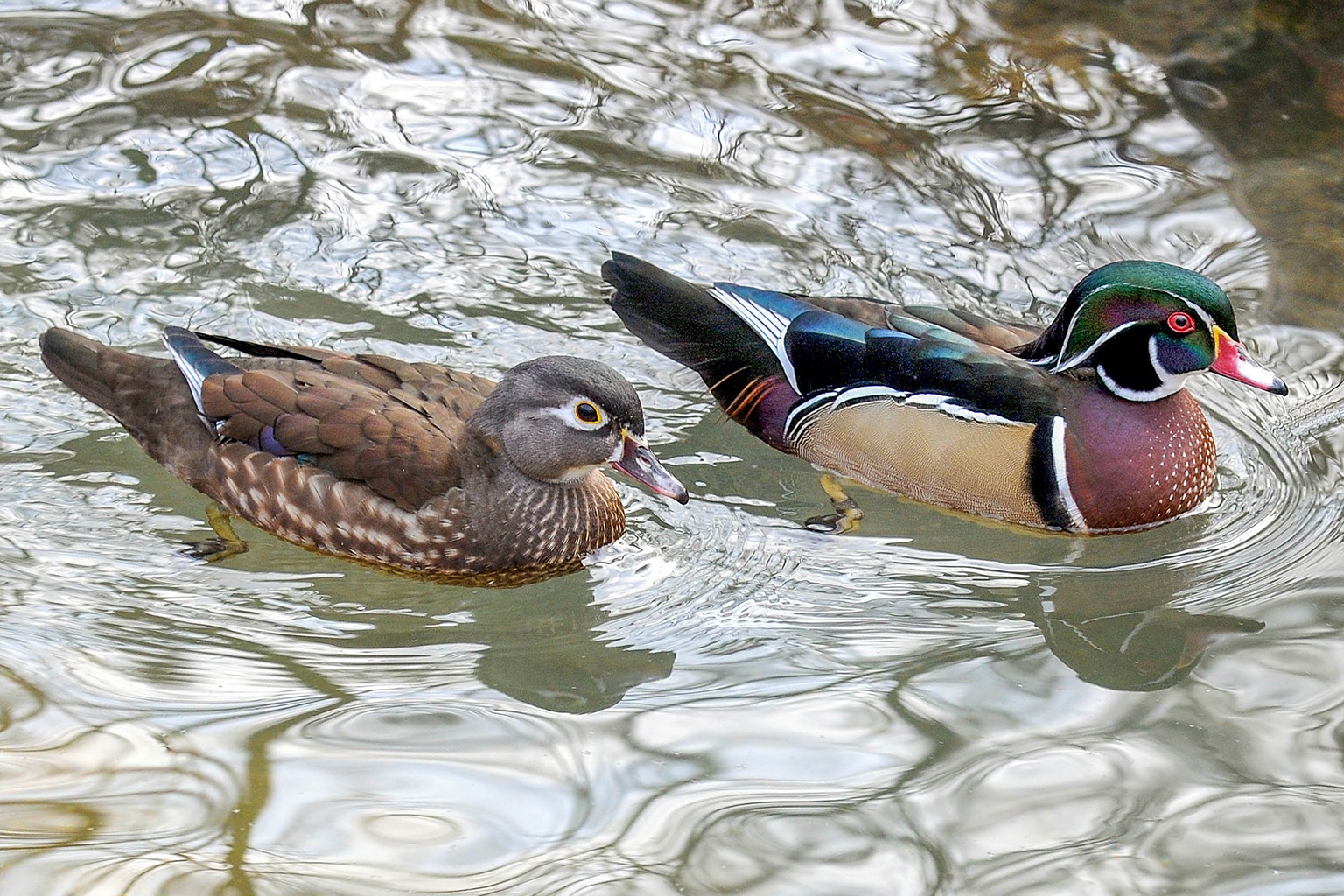
The Wood Duck is one of the most colorful and easily recognized ducks in the United States. Males have shiny green heads, red eyes, and bold white stripes. The females have brown color with a white eye-ring. They’re often seen in wooded swamps, ponds, and rivers.
These ducks nest in tree cavities and even use nest boxes if available. They can rest on branches because of their strong claws, which is rare for ducks. Wood Ducks mostly eat seeds, fruits, and insects found in or near the water.
This duck is a unique bird and differs in many behavioral characteristics from other ducks. Here are some unique and interesting facts related to them:
1 Lives Comfortably in Tree Cavities
Wood ducks actually nest in tree holes unlike most ducks that stick to the ground or water. They can be found living in old woodpecker holes or natural cavities, sometimes 60 feet above the ground.
This makes them one of the few ducks that truly appreciate tree life in the U.S. Their sharp claws help them grip the bark while climbing.
2 Ducklings Leap from Heights
Baby wood ducks jump from their nest right after hatching despite its height. They land on leaves or soft forest floor below which is guided by their mother’s calls.
It sounds dangerous, but their tiny and fluffy bodies bounce instead of breaking. This wild start to life is quite a spectacle to witness.
3 Ducklings Climb Using Claws
Most ducklings are helpless on land, but not wood duck babies. They climb up inside the nest using tiny claws just hours after hatching. It’s how they reach the edge before their famous leap.
This natural climbing skill sets them apart from many other species.
4 Females Make a Whining Call
Female wood ducks use a soft and whining call to communicate unlike the classic “quack” sound we expect. It’s more of a squeaky “oo-eek” sound that carries through wooded wetlands.
They use it to call their ducklings or alert others to danger. You can often hear it before you even spot them.
5 Perfectly Suited for Forest Wetlands
Wood ducks are rarely seen in open lakes or fields like many other ducks. They prefer swampy forests, flooded timber, and quiet woodland streams.
These hidden habitats give them cover from predators and easy access to nesting trees. It’s one reason they’re not as commonly spotted by casual birdwatchers.
6 Can Eat Acorns and Seeds
Wood ducks have a diet that includes acorns which is contrary to ducks go for aquatic plants or small insects. Their strong bills can handle these tough nuts.
They also feed on seeds, berries, and small invertebrates. This flexible diet helps them survive in wooded areas across the forests.
7 Often Seen Resting on Branches

You might be surprised to see a duck sitting on a branch like a songbird. But wood ducks have strong claws that let them perch with ease. This unique ability helps them rest safely above ground.
8 Males Leave Early After Mating
Male wood ducks don’t stick around to raise their young. They soon leave the females to handle nesting duties alone after mating in spring. The males then gather in small groups to shed feathers.
They stay quiet and hidden to avoid attracting predators during this time.
9 Eyes Change Color With Age
The eye color changes as wood ducks grow. Male ducklings start with brownish eyes, which turn bright red as they mature. This change is part of their breeding display.
It’s a small but noticeable detail that adds to their dramatic appearance.
10 Play an Important Role in Forest Ecology
Wood ducks help support forest health by spreading seeds from berries and nuts. They carry seeds in their droppings as they move through different wetlands and woodlands.
This helps new plants grow over time. They’re small birds with a big environmental impact.
11 Rarely Dive Underwater
Wood ducks don’t dive like some of their cousins. They stick to dabbling and tipping forward in shallow water to feed. You’ll see their tails in the air and heads down as they search for food.
This makes them easier to spot compared to diving ducks.
12 Can Raise Two Ducklings in a Season
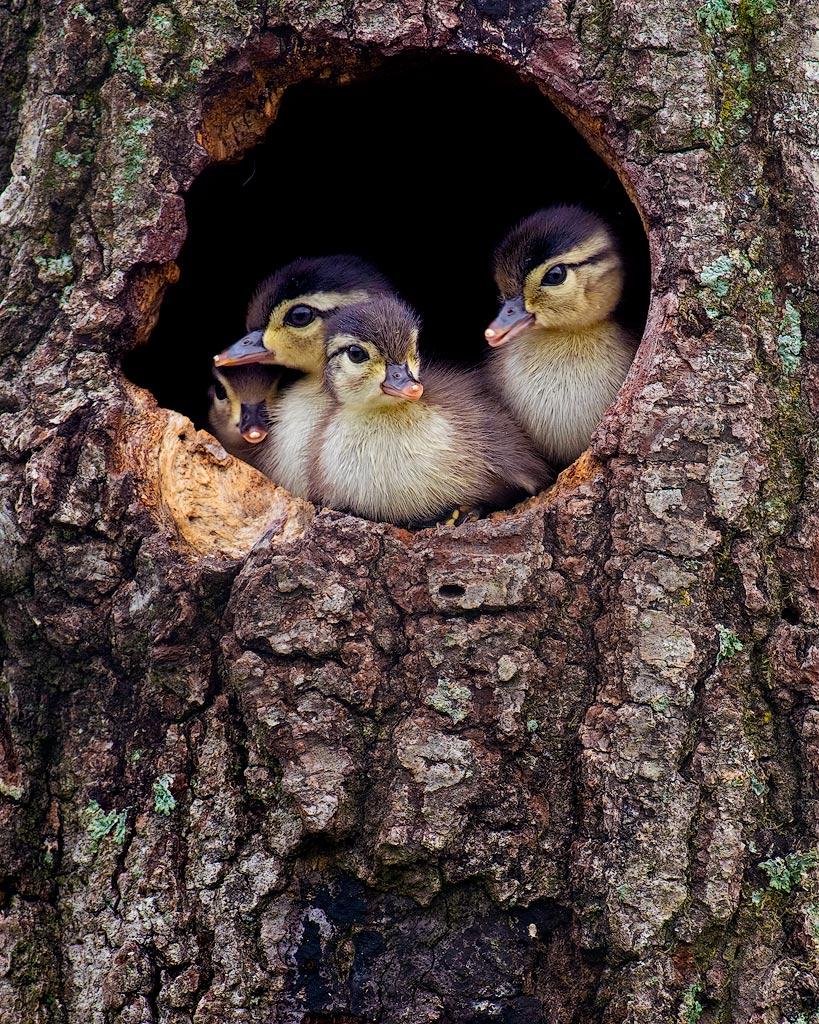
Female wood ducks sometimes raise two sets of ducklings in one year. That’s rare for ducks and shows how productive they can be when conditions are right.
A second brood gives their population a helpful boost.
13 Males Show Off in Full Color
Male wood ducks in the U.S. are among the most colorful waterfowl. Their glossy green heads, red eyes, and bold chestnut chest stand out in spring.
These bright colors are mainly for attracting females during mating season. They molt into dull feathers to stay hidden from predators in winter.
14 Known to Use Abandoned Nests
Wood ducks won’t hesitate to use old nests left behind by other birds or even squirrels. They’ll make do with what’s available if it seems safe and dry.
Two females sometimes lay eggs in the same nest leading to extra-large broods.
15 Excellent Fliers Through Dense Forests
Wood ducks are active fliers through tight spaces unlike many waterfowl birds. They weave between trees with quick and powerful wingbeats. Their flight is fast and direct which is perfect for escaping predators or passing through forests.
SOURCE: MOSTBEAUTIFULBIRDS.COM
 Sew Colorful
LikeLiked by 1 person
I find soccer sooo boring.
LikeLiked by 1 person
Yep – same here! Not the slightest bit interested!
LikeLiked by 1 person
hubby played soccer in high school–pretty good too–and even he doesn’t watch it on tv…lol
LikeLiked by 1 person
But, then, I’m no longer interested in watching any sports pretty much….horse races but that’s it.
LikeLiked by 1 person
LikeLiked by 1 person
I made a stromboli for supper and hubby put Little House in the dvd player…lol
LikeLiked by 1 person
Nick Sortor
@nicksortor
🚨 BREAKING UPDATE: The US military strikes on Iran are ONGOING after Iran launched attack drones at cargo ships in the Strait, per Fox “It’s clear this is NOT a symbolic strike.” “They want the Iranians to know that it’s the U.S. Military, they want the world to know they’re responding, and it’s unacceptable to stop these ships doing through the Strait of Hormuz”
LikeLiked by 1 person
Good night, Pat! Waiting for Mark to come by and p/up my truck per his call earlier today.
LikeLiked by 1 person
Good night Filly!
LikeLiked by 1 person
Good Night All!
LikeLike