
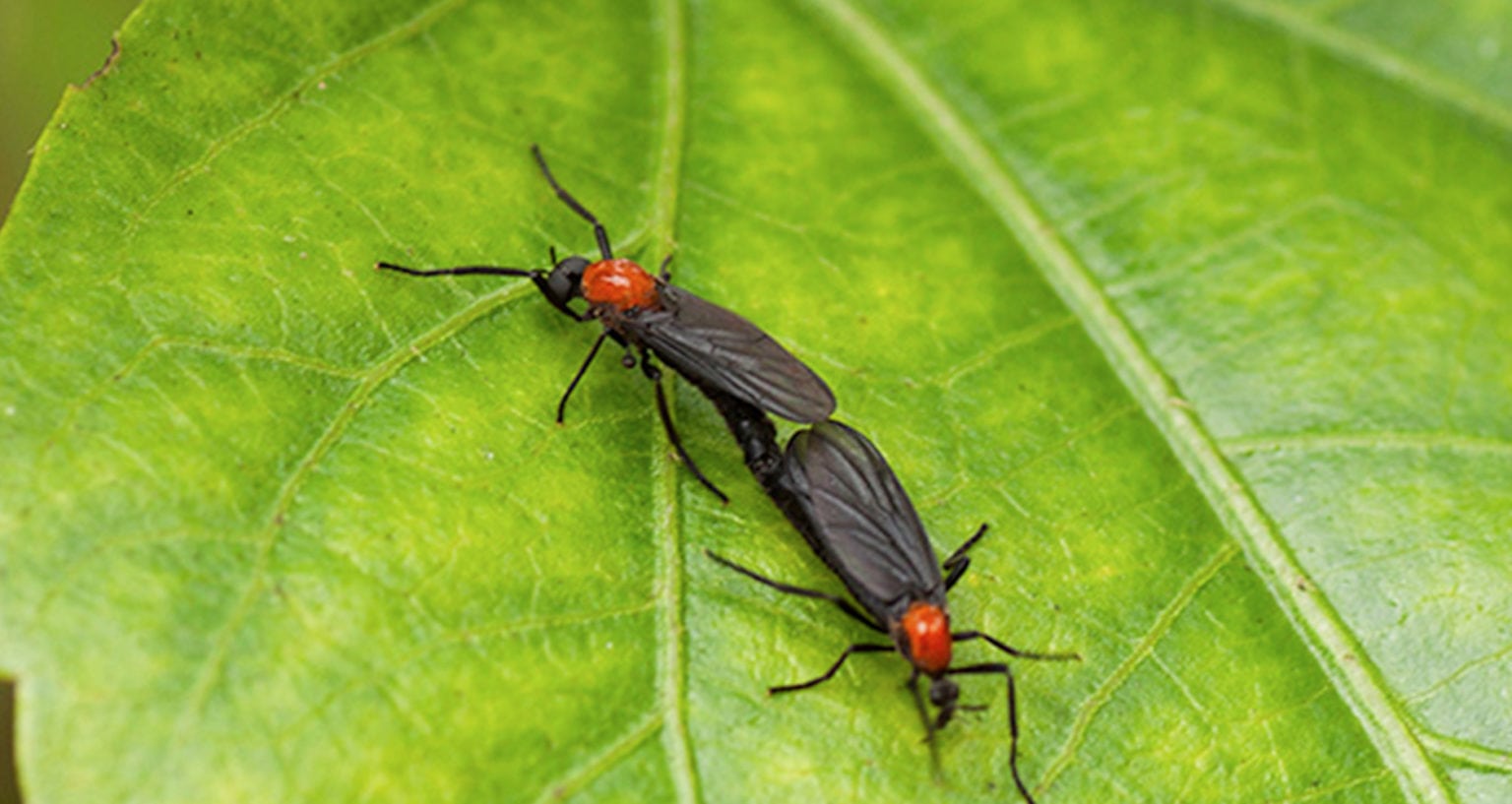
Love bugs, also known as the honeymoon or double-headed fly, are a species of march flies that are commonly found in parts of Central America and the southeastern United States.
Despite their seemingly affectionate name, these insects can become quite a nuisance, particularly during their mating seasons which occur twice a year. They are known for their unique mating behavior, where the male and female remain attached for several days.
Contrary to popular belief, love bugs do not bite or sting, making them harmless to humans. However, their sheer numbers, especially during their mating periods, can cause inconveniences.
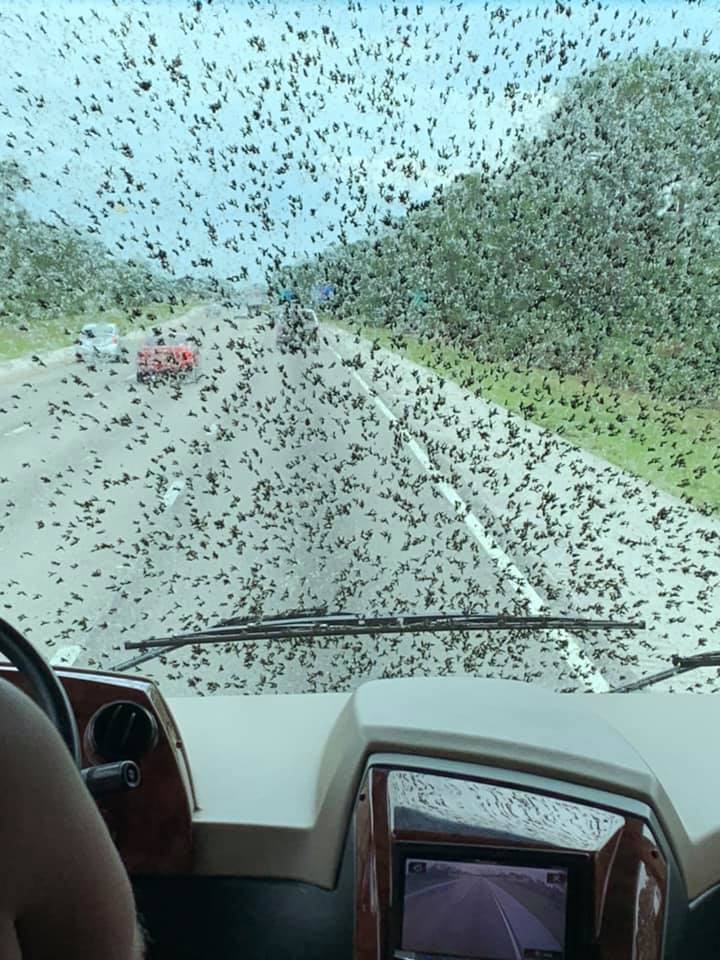
They often swarm around highways, resulting in visibility issues for drivers and potential damage to vehicles due to their acidic body chemistry.
Love bugs, scientifically known as Plecia nearctica, are a species of fly that are quite common in parts of the United States, particularly in the southern regions. These small, red and black insects are often seen in large swarms, especially during their mating seasons in spring and late summer.
The name “love bug” is derived from their unique mating habits. After mating, the male and female remain attached to each other, flying in tandem for several days. This distinctive behavior, coupled with their striking red and black coloration, makes them easily recognizable and has earned them their romantic nickname.
Despite their endearing name, love bugs can be quite a nuisance. They are attracted to heat and the exhaust fumes of cars, often resulting in large numbers of these insects splattering on windshields and car grills.
Besides being a driving hazard, the acidic body fluids of love bugs can lead to paint damage if not removed promptly.

During their adult life, love bugs are often seen in large swarms, especially during their peak mating seasons in May and September. These swarms can be so dense that they cause visibility issues for drivers. It’s during these swarms that you may wonder where they all go.
In fact, their lifespan as adults is very short – only about three to four days. After mating, the females lay their eggs and then die, while the males die shortly after mating. This means that the swarms of love bugs disappear almost as quickly as they appear, leaving behind only their eggs to continue the cycle of life.
SOURCE: PLANETNATURAL.COM
 Sew Colorful
BWAHAHAHAHAHAHA
PDJT revoked security clearances for Lettia James and Alvin Bragg
https://nypost.com/2025/02/08/us-news/trump-stripping-the-security-clearances-from-a-new-hit-list-of-antagonists-including-ny-ag-letitia-james-da-alvin-bragg/
LikeLiked by 1 person
Good! They are pure evil!!!
LikeLiked by 1 person
JACKSONVILLE, Fla. – Researchers are tracking what is believed to be the largest shark ever tagged by OCEARCH in the southwest Atlantic, with its last pings off Florida’s east coast. The white shark, named Contender, was originally tagged on Jan. 17, 2025, approximately 45 miles off the coast of the Florida-Georgia border and has generally traveled southward along the Gulf Stream.
According to biologists, the shark is nearly 14-feet long and weighed an impressive 1,652.8 pounds when it was found by researchers. The shark’s tag will transmit real-time data to researchers, providing insights into his movements and behavior over the next several years.
“Contender’s name is in honor of Contender Boats, a longtime OCEARCH partner, whose industry-leading sport fishing and pleasure boats enable our research missions. Their commitment to performance and innovation is essential to our ability to explore and protect our oceans,” the group stated.
There is no need for beachgoers to cancel their vacations to the Sunshine State as the white shark has generally stayed more than 40 miles off the coast. According to biologists, sharks often migrate to the waters off of Florida and the Southeast during the fall and winter in search of prey. During the spring and summer, the marine animals tend to travel further offshore and head northward towards the Northeast U.S. and Canada to feed on seals.
According to the International Fund for Animal Welfare, the population of white sharks around the world is thought to exceed 3,000 and is presently not considered to be endangered; however, climate change and entanglements have impacted the population.
OCEARCH said the tag on Contender needs to be exposed to the air for around 90 seconds, to triangulate the shark’s location accurately. The battery is said to last around five years, but its lifespan is entirely dependent on how many times the shark surfaces.
As of late 2024, marine biologists had tagged nearly 400 sharks with most being either great white or tiger sharks.
Track the giant fish on OCEARCH’s shark tracker: https://www.ocearch.org/tracker/
https://www.instagram.com/ocearch/?utm_source=ig_embed
https://www.foxweather.com/earth-space/ocearch-track-sharks-ocean
LikeLiked by 1 person
this is why i don’t go in the water!
LikeLiked by 1 person
You and me both!
LikeLiked by 1 person
So did hubby get his job done safely?
LikeLiked by 1 person
he did…thank God.
after he caught his breath and warmed up, we talked and he said the driveway was a lot worse than it looked. sigh. and i was worried enough before that.
LikeLiked by 1 person
I am adding a short daily prayer to the board. I would invite each of you, if you wish, to also add one or maybe two of your own liking. I do not want to stifle anyone but please limit yourself to one or two religious postings. here’s one I found that I liked.
LikeLike
LikeLike
LikeLike
Good night! Weird – sun is shining but it’s also snowing lightly!
LikeLiked by 1 person
Good Night Filly!
it’s already dark here…
LikeLiked by 1 person
LikeLike
LikeLike
Good Night All!
LikeLike
Interesting. I wonder what happens to dead love bug bodies, other than getting stuck on windshields and car grilles.
LikeLiked by 1 person
hey there katharine!
glad to see you again. hope all is well with you!!
LikeLiked by 1 person
I like following your thread. You write about interesting things. Y’all make a good team.
LikeLiked by 1 person
thank you.
it’d just be me twiddling my thumbs if Filly and GA didn’t come and chat! everybody brings something good to the table!
(Filly makes me laugh and GA got me addicted to pecans…lol)
LikeLiked by 1 person
Yes, and y’all minimize the politics, which can be overwhelming in other places. The story of love bugs is noteworthy. I have had to drive through swarms of them and to clean their little carcasses off my car. Is there a love bug heaven or hell?
LikeLiked by 1 person
LOL…I have no idea.
i guess it depends on whether you’re a love bug or not. if I was a lovebug, then lots of dead ones would seem like hell to me. if i was a person scraping them off my vehicle all the time, then lots of dead ones would be like heaven to me.
LikeLiked by 1 person