
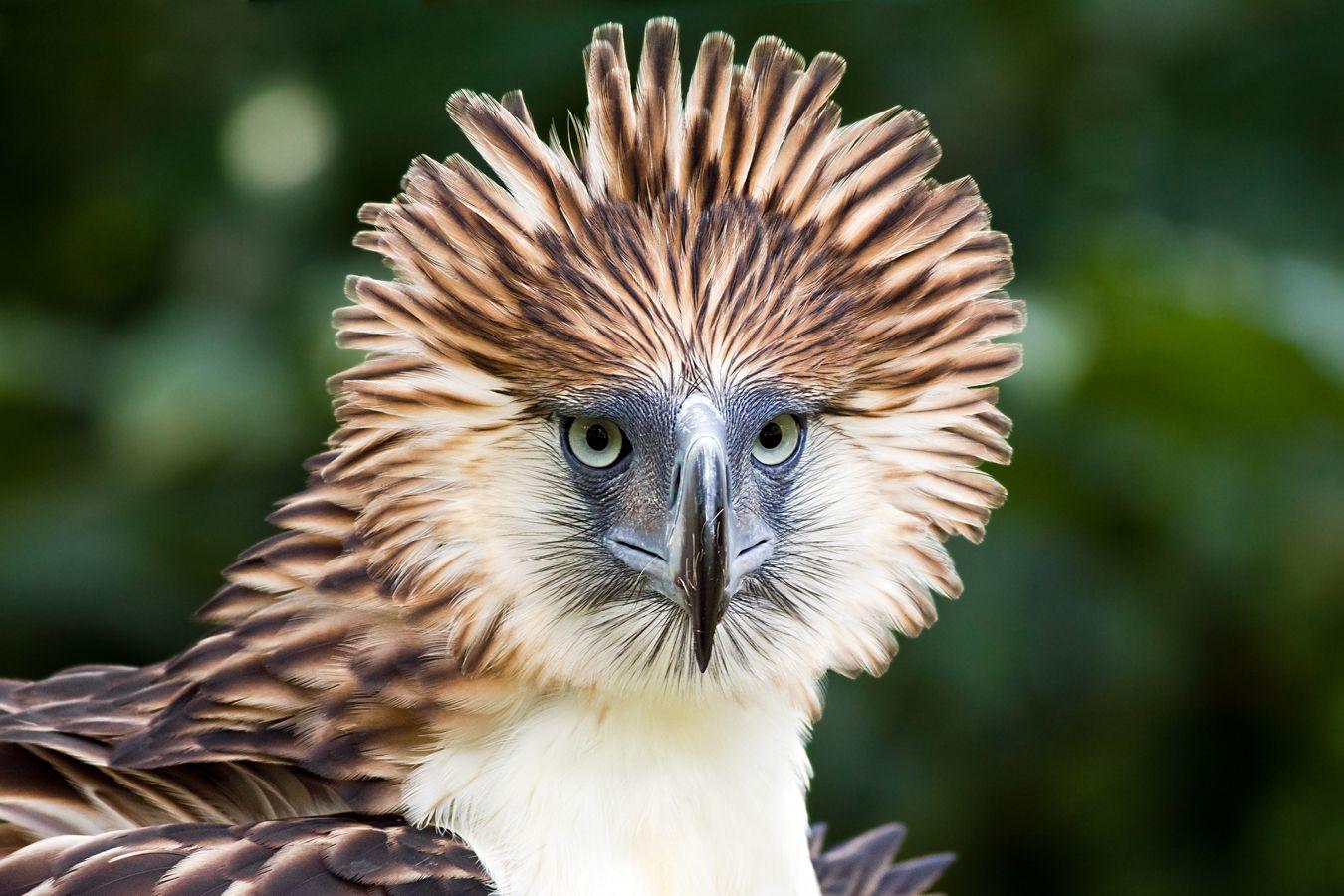
The Philippine eagle or monkey-eating eagle is considered one of the rarest and most powerful birds in the world. The Southeast Asian country declared it as its national bird and protects this critically-endangered species at all costs, punishing those who are found guilty of killing it with 12 years of imprisonment or with high fines. Below, we round up 11 interesting facts about this majestic bird.
It can live up to 60 years of age
The Philippine eagle’s life expectancy ranges from 30 to 60 years. Two Philippine eagles were recorded to have lived for more than 40 years – one of which died on October 2016. The full-grown, female Philippine eagle named ‘Thor’ (after the Norse God of Thunder), died due to old age. Authorities believe her captivity worsened her condition. Hence, it is believed the Philippine eagle can live longer if left in the wild.
The female Philippine eagle is usually bigger
The giant forest raptor is not only considered as rare and powerful but also recognised for its length. It can grow up to 3 feet and its wingspan can extend up to 7 feet. Average measurements among male and female Philippine eagles suggest the female Philippine eagle can be 10% bigger than its male counterpart. In terms of length, it’s considered as the largest surviving eagle in the world.
It doesn’t really eat monkeys
Earlier beliefs suggested that the Philippine eagle was also known as the monkey-eating eagle because it preyed on monkeys. However, contrary to popular belief, the Philippine eagle does not eat monkeys. According to recent studies, it preys on a variety of animals, usually rodents, bats, snakes, and pigs.
It has a distinguished noise
The noises heard from a Philippine eagle are described as loud and high-pitched, suggesting its fierce and territorial characteristics. It has clearer eyesight than humans.

It is found in four major islands in the Philippines
It’s only found in the Philippines, and can be spotted on four major islands. These are the islands of Leyte, Luz
on, Mindanao, and Samar. However, due to shooting and trapping, the Philippine eagle has been critically endangered for years. Despite the prevalence of strict laws, there are still cases of Philippine eagles being shot in forests. Thus, the Philippine Eagle Center was put up as a conservation breeding facility for this highly-threatened raptor.
Deforestration is usually the cause of its death
The forest, particularly lush dense forests, is the Philippine eagle’s home. Despite the country’s abundance of greenery, massive logging and irresponsible use of resources is killing the forests, thereby killing the species’ home. Aside from shooting and trapping, deforestration is also seen as a major cause of Philippine eagle deaths.
The Philippine Eagle is monogamous and loyal
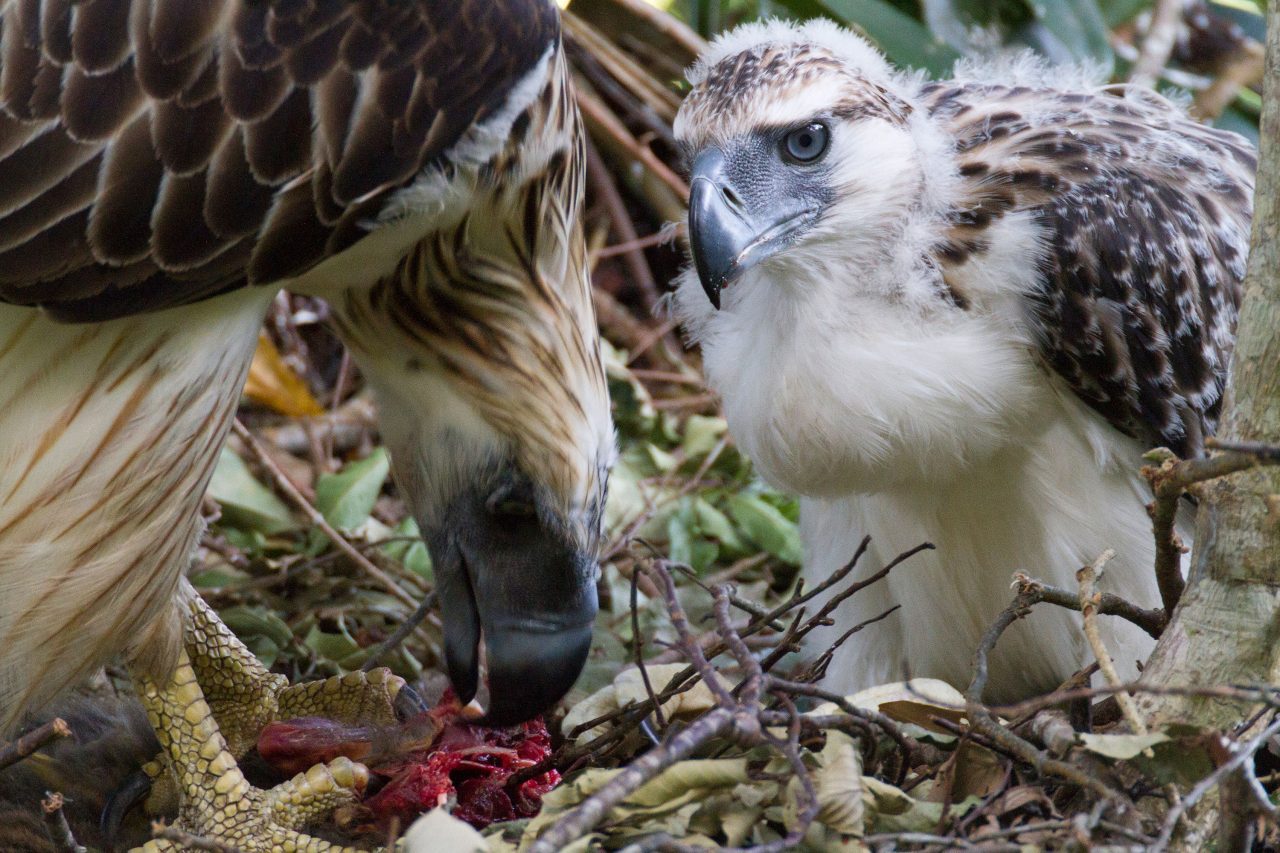
The Philippine eagle is reportedly very loyal. Once paired to a partner, they choose to remain as a couple for the rest of their lives. As for their offsprings, a Philippine eagle only lays a single egg every two years. And before they lay another egg, the parent eagles ensure that their offspring can already survive on its own.
A British naturalist discovered the Philippine eagle
t wasn’t a Filipino or local who discovered this powerful bird species. British naturalist and explorer John Whitehead discovered the Philippine eagle in 1896, when he found the specimen in Paranas, Samar. In honor of his father, who financed his expeditions and explorations, the Philippine eagle was scientifically named as ‘Pithecophaga jefferyi’ – where ‘jefferyi’ means Jeffrey (the father of John Whitehead).
It has no recognized subspecies
The Philippine eagle was named as the country’s national bird in 1995. Proclamation No. 615, signed by former President Fidel Ramos, gave way to the recognition of the species as the country’s national bird. It was recognized as such for it is only found in the Philippines and according to the proclamation, its distinguished characteristics of strength and love for freedom exemplify the Filipino people. Unlike other raptors, the Philippine eagle has no known close relatives or sub-species, making it very unique.
Its sighting indicates a healthy environment
Since it lives in forests, many believe that sightings of a Philippine eagle indicate the healthy condition of the forest. Additionally, its presence suggests that there’s balance in the ecosystem and with a healthy natural environment, flooding and climate change effects are minimized.

SOURCE: THECULTURETRIP.COM
 Sew Colorful
List of DPs books
https://www.goodreads.com/author/list/14203676.Patricia_Holden
My review of the first one
LikeLiked by 2 people
ok let’s try this again wp
List of DPs books
https://www.goodreads.com/author/list/14203676.Patricia_Holden
My review of the first one
LikeLiked by 2 people
did you know at the time it was DePat??
LikeLiked by 1 person
Yes she asked me if I was willing to read her book.
I told her I do honest reviews. She said that’s fine. Ended up enjoying it. Sent her the review and she was thrilled.
Same with CVs book.
LikeLiked by 2 people
romance novels and memoirs aren’t my reading choices. i love mysteries. it’s great you can give an honest review (and it’s good ones!)
LikeLiked by 1 person
Oh I feel you. I love a good mystery…
I just give everything a chance because sometimes something good pops up.
And good stories that are being published at the moment are few and far between….
I let mom read some of them and if she’s not into it I know it’s bad.
LikeLiked by 1 person
LOL
I think it’s mostly because the first “romance” novel i ever read was basically porn with them talking a lot.
romance does need it’s own special closet.
but who done its? i like figuring out who did it. but give a good reason and it can’t be a character who’s barely introduced. LOL
I am picky I guess.
LikeLiked by 1 person
🤣😂🤣. Nope it’s common sense.
I will see if I can recommend any good mystery ones
LikeLiked by 1 person
I did read a lot of Dana DeLeon mysteries. but her husband just unexpectedly passed. she is devastated. it will take a while for her to want to write again i think.
I like a funny author as well…always a plus in my book….lol
LikeLiked by 1 person
I will have to look her up.
Hmmmm let me see if I find something good for you
LikeLike
Because I do physical book copies not ebooks but for one ti e what the hell why not lol
LikeLiked by 1 person
“Big ice, little boat”
What is the ice falls???
LikeLiked by 1 person
whoa awesome pictures! that guy climbing the ice wall is certifiable!!!
LikeLiked by 1 person
My sentiments exactly!!!
LikeLiked by 1 person
LikeLiked by 1 person
whoa that’s a new-ish cat–ever seen one like that before?
LikeLiked by 1 person
No, it’s just a darker-than-normal Lynx.
LikeLiked by 1 person
oh wow…cool cats
LikeLiked by 1 person
Bet hubby will like this one!!!
Iceland
LikeLiked by 1 person
he said at this stage of his life he’d need a ladder to climb up in that truck! LOL
LikeLiked by 1 person
True but still…..that don’t mean he can’t dream! LOL
LikeLiked by 1 person
oh he’s dreaming alright…but he does need a new truck soon. or as he says ANOTHER truck maybe not new.
LikeLiked by 1 person
I am adding a short daily prayer to the board. I would invite each of you, if you wish, to also add one or maybe two of your own liking. I do not want to stifle anyone but please limit yourself to one or two religious postings. here’s one I found that I liked.
LikeLike
LikeLike
LikeLike
Good night!
LikeLike
Good Night Filly!
LikeLiked by 1 person
LikeLike
LikeLike
Good Night All!
LikeLiked by 1 person