
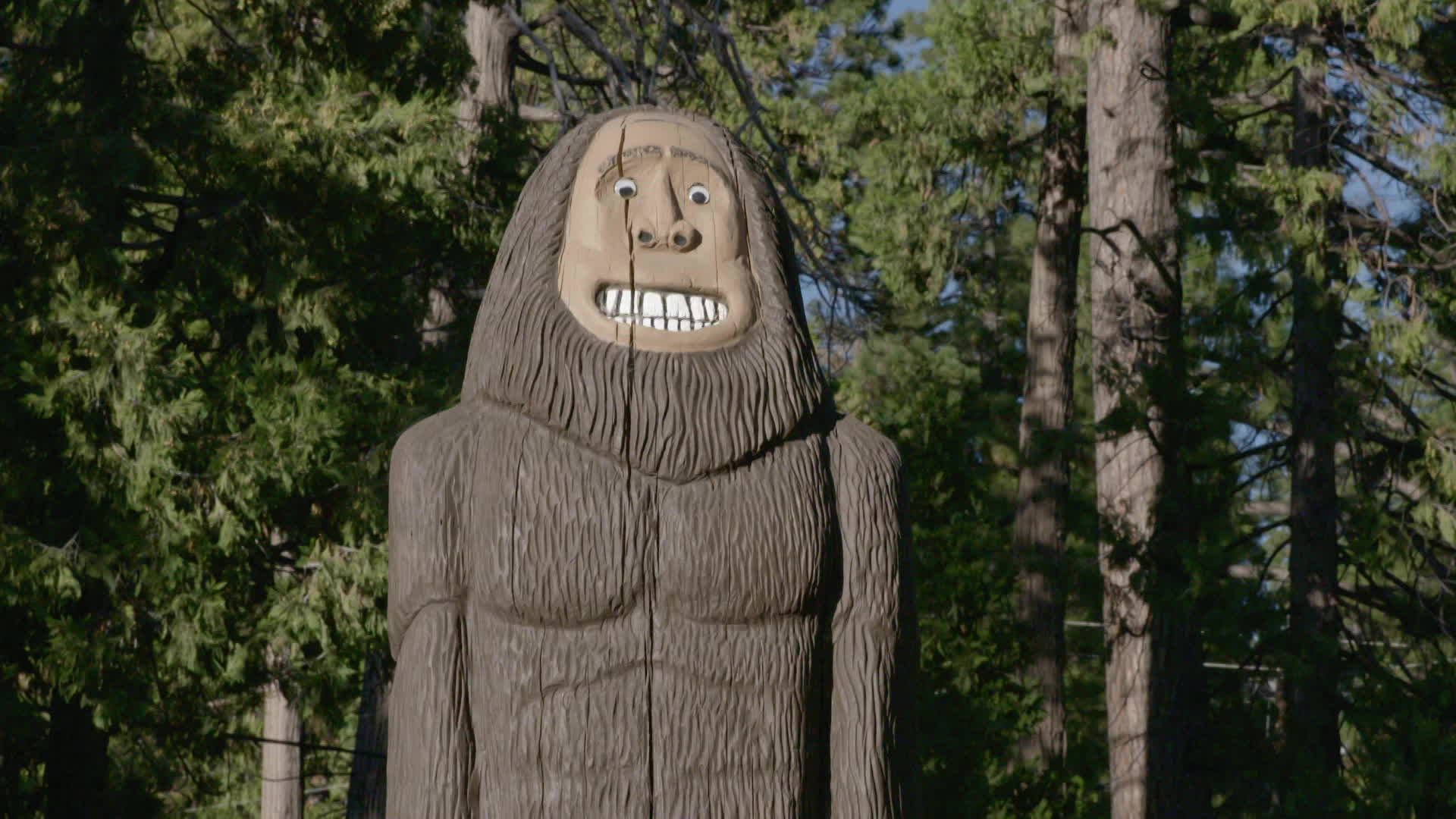
From Mentalfloss.com:
6 What happened to Roald Amundsen?
Exploration is a dangerous business. All 129 men who comprised the polar exploration venture known as the Franklin Expedition died in the years after the mission’s 1845 launch. The case of Amelia Earhart, the pilot who vanished with her navigator Fred Noonan while attempting to circumnavigate the globe in 1937, continues to make front page news despite little progress being made. We still don’t know what happened to British explorer Percy Fawcett, who vanished in the Amazonian jungle in 1925 while searching for the legendary lost city of Z, or Henry Hudson, who was placed in a small boat and cast adrift in waters off northeastern Canada following a mutiny in 1611.
The disappearance of legendary Norwegian explorer Roald Amundsen is a little different. Amundsen had certainly been at the forefront of polar exploration—he was the first to sail the Northwest Passage and, a few years later, he beat England’s Robert Falcon Scott to the South Pole by several weeks. But Amundsen didn’t die while charting new territory; he vanished on a rescue mission while trying to come to the aid of Italian pilot and aeronautical engineer Umberto Nobile, whose airship had crashed while exploring the Arctic in 1928. Amundsen’s own plane is thought to have gone down somewhere around Bear Island in Norway’s Svalbard archipelago. Fishermen found something strange in the area in 1933, but the object fell back into the sea before it could be recovered; a high-tech 2009 search came up empty. Amundsen’s fate remains a mystery, but according to Norway’s Roald Amundsen’s House, three objects that were recovered soon after Amundsen’s disappearance might suggest a crash south of Bear Island.
7 Who was D.B. Cooper?
No survey of historical mysteries would be complete without the tale of the man known as D.B. Cooper, the only person to have hijacked a commercial plane in the United States and gotten away with it (or at least evaded capture). Plenty of notorious criminals have managed to remain unidentified for decades or longer—we still don’t know the identities of Jack the Ripper, the Axeman of New Orleans, or the Zodiac Killer, to name a few—but Cooper belongs to a very different category. Other than showing a flight attendant a device he claimed was a bomb, his crime was nonviolent, and it was stunning in its boldness.
The day before Thanksgiving in 1971, Cooper boarded a flight from Portland, Oregon, to Seattle. A little after 3 p.m., he handed a flight attendant a note, flashed his supposed bomb, and made his demand: He was to be given $200,000 in cash and four parachutes, saying, “No funny stuff or I’ll do the job.” The plane landed in Seattle, traded its passengers and most of the flight attendants for Cooper’s ransom, and took off again.
As the plane flew over an area somewhere between Seattle and Reno, Cooper jumped into the cold, rainy night, buffeted by 200-mph winds, with nothing but the business suit (and possibly a trench coat) he was wearing, two parachutes, and $200,000 (a little more than $1.5 million in today’s currency). The ensuing manhunt, officially known as NORJAK, for “Northwest Hijacking,” lasted 45 years and yielded 800 suspects but no arrests. Cooper has become a folk hero to many, inspiring songs, movies, TV shows, podcasts, books, and even an annual gathering of enthusiasts known as “CooperCon.”
It’s likely Cooper didn’t survive the jump, which was so dangerous that an experienced parachutist would probably never have attempted it in the first place. In 1980, some of the ransom money was found near the Columbia River, leading some to suspect Cooper had perhaps parachuted into the water and died, but a 2020 study that examined diatom species on the recovered bills found they were exposed to water around May-June rather than November. Though the FBI officially dropped the case in 2016, amateur sleuths are still trying to crack the mystery. One theory even claims Cooper was a transgender woman named Barbara Dayton, who died in 2002 at the age of 76.
8 What happened to the lightkeepers of Flannan Isle?

There’s an entire category of historical mysteries devoted to vanishings—people who just seemed to disappear into thin air, leaving no physical clues about what might have happened to them. Jimmy Hoffa is probably the textbook example; nearly 50 years after he disappeared from the parking lot of a Detroit restaurant, his body still hasn’t been found. But 75 years before Hoffa met his fate, Scotland was investigating its own unexplained vanishing—three of them, in fact.
In December 1900, a steamship was passing by the Flannan Isles when its crew noticed the lighthouse had gone dark. Then, on December 26, a relief lighthouse keeper found the Flannan Isle structure abandoned. A search turned up no trace of the men, but there were signs that a violent storm had torn across the island: Supplies were strewn across the ground well above sea level, iron railings were twisted, and an enormous boulder had been dislodged.
The subsequent investigation assumed the men had been caught in the storm and swept out to sea, but troubling details remained. For instance, if the men had ventured into the storm to secure equipment as had been assumed, why did one of them leave his raingear behind? A theory suggested by shepherds who grazed their sheep on the island connected the men’s deaths to a powerful marine spout that would sporadically shoot dangerous volumes of compressed seawater into the air. Perhaps one man stayed behind while the other two went out into a storm to secure equipment, saw from the lighthouse that conditions were right for the water to erupt, and rushed out to warn the others, only for all three to be swept out to sea in the storm. Others discount the compressed water explanation, but broadly agree that two of the men were outside doing something and for some reason the third man had to run outside in a hurry. A few years later, the poet Wilfrid Wilson Gibson invented stories of an overturned chair and partially eaten food, helping to create an enduring mystery.
9 Was King Arthur real?
The story of King Arthur is one of the most influential and widely studied literary cycles in Western culture, but there’s one big thing we don’t know about it: Did Arthur really exist?
There’s a vague reference to a legendary hero named Arthur in the Welsh poem Y Gododdin dated to around the 6th or 7th century, but it’s not that simple. The story survives in a couple different versions written centuries later, and only one of them mentions Arthur. Whether the Arthur reference is a 7th century original, a 13th century addition, or something in between is a contested area of scholarship.
The first explicit accounts date back to the 9th century Historia Brittonum, which documented 12 battles supposedly fought against the Saxons by a British military commander identified as Arthur. His feats were impressive, to say the least—in the 12th battle, he supposedly killed over 900 enemy soldiers all by himself.
Cleric Geoffrey of Monmouth built on Arthur’s legend in the 12th century with his History of the Kings of Britain, and subsequent Arthurian poems and romances added now-familiar elements such as the Round Table and the quest for the Holy Grail. It wasn’t until the 15th century that Thomas Malory came along and gave us what many now think of as the definitive story of King Arthur, Le Morte d’Arthur.
When we ask whether Arthur really existed, it’s important to decide which version of him we’re asking about. If it’s the one that began with Geoffrey—a glorious king who once ruled most of Europe—the answer is probably no. If such a ruler had existed, odds are slim he would have been omitted from the historical record. But the Historia Brittonum’s earlier account of a great military leader called Arthur might have some basis in fact. The author probably got some of the details wrong—it would have been logistically impossible for one man to have fought in all 12 of the battles—but it’s not impossible that at some point in the dim and distant past there was a real military leader who rallied the fractured tribes of early medieval Britain against their Saxon invaders.
10 What happened to the Roanoke colony?
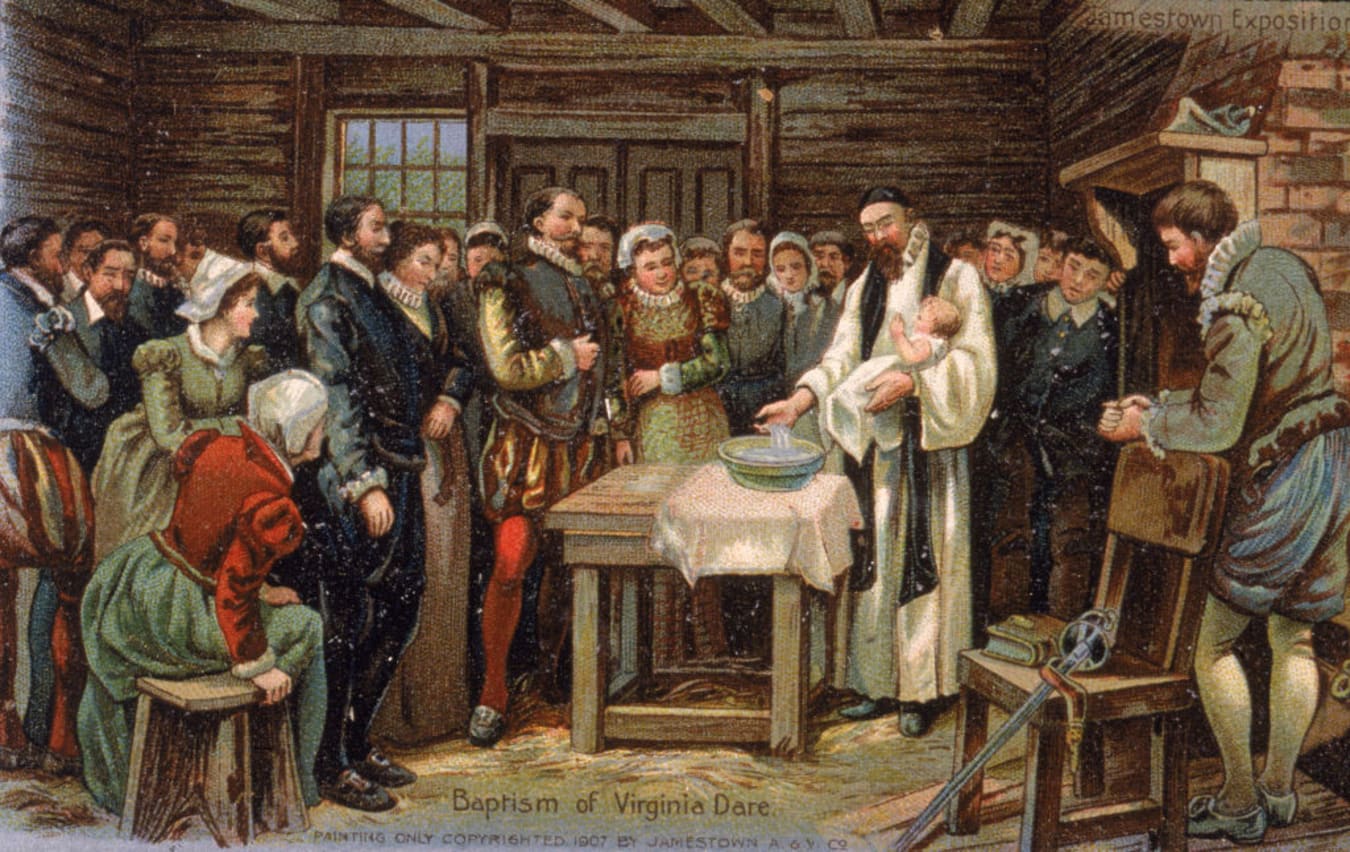
( Pat’s Note: I do a deeper dive into this particular mystery later in the month.)
England’s plan to colonize North America did not get off to a smooth start. By the time artist-turned-explorer John White and about 115 colonists arrived on Roanoke Island off the coast of modern-day North Carolina in 1587, the settlement already had a reputation. It had been abandoned once in 1586, and a garrison of 15 men who were later deposited there, tasked with holding the land on England’s behalf, also disappeared, leaving behind nothing but a single skeleton to greet the next batch of colonists, who weren’t even supposed to be staying there. (The plan had been to proceed up to the Chesapeake Bay after stopping at Roanoke Island, but the conventional story is that the captain refused to go further.) There’s no reason to have expected White’s colony—which settled in an area where their recent predecessors had had trouble securing food, encountered formidable weather, and were quickly burning through any good will the Native American populations had shown them—would have fared any better.
The colonists arrived too late in the year to grow their own food, and White returned to England for more supplies. The first Anglo-Spanish War delayed his return, and when he finally got back in 1590, everyone was gone. But White didn’t seem puzzled by their disappearance. Someone had carved the word CROATOAN, the name of both a nearby island and the friendly Native American group who inhabited it, into a palisade post (or maybe a tree). White had instructed that if the colonists found themselves in distress, they should carve a type of cross alongside the location, but there was no cross—so he interpreted as a “certaine token of their safe being at Croatoan.” But a storm stopped him from sailing there to look for them, and he was never able to raise the money to finance another expedition to the New World.
Hard archeological evidence for White’s proclamation “of their safe being at Croatoan” is still lacking. Most researchers think the settlers were either killed by Native Americans who’d turned hostile to European colonizers or, more likely, were absorbed into friendlier Native populations.
According to archeologist Charles Ewen, the idea that there’s anything particularly strange about the colony’s disappearance might be a relatively modern development. “It’s no big mystery until you start to get a historical type of writing in the 1800s,” he told The New York Times in 2020, pointing out that failed colonization attempts were hardly out of the ordinary (though Ewen himself is skeptical of the Croatoan explanation for a lack of actual evidence). Science writer Andrew Lawler, author of The Secret Token: Myth, Obsession, and the Search for the Lost Colony of Roanoke, told Salon that “the ‘Lost Colony’ is a product of the 19th century”—a time, he says, when “the idea of the colonists assimilating with the Native Americans was a taboo.”
SOURCE: MENTAL FLOSS
 Sew Colorful
LikeLiked by 1 person
watching the bucks chase the does again.
there is a magnificent 8 pointer beefy chest gleaming rack that dominates this territory. and he has been chasing and servicing does for the last 2 days. wonder if they remember to eat? LOL
LikeLiked by 1 person
“Hey – Mark Cuban – these women wanna kick your ass…
The woman pictured in front with the blue jacket is Susie Wiles, one of the most powerful players in Republican politics, who ran Donald Trump’s campaign for re-election and who has just become his next chief of staff. In his statement on Thursday evening Trump said that Wiles “just helped me achieve one of the greatest political victories in American history” and “is tough, smart, innovative, and is universally admired and respected”.
“It is a well deserved honour to have Susie as the first-ever female chief of staff in United States history,” he continued. “I have no doubt that she will make our country proud.” Wiles, 67, is the first woman to be appointed White House chief of staff and in his victory speech in Florida the President-elect Donald Trump mentioned her previously little-known name seven times.
“Let me also express my tremendous appreciation for Susie and Chris —the job you did. Come, Susie,” Trump said. “Susie likes to stay in the back, let me tell you. We call her the ice maiden”, he joked, adding. “She is not in the background anymore.”
Suck on that Cuban – STFU and just go away…”
LikeLiked by 1 person
LikeLiked by 1 person
LikeLiked by 1 person
SPIT!!!!!!!!!!!!!!!!!!!!!!!!!!!!!!
the pee test got me…shared at wolf’s!
LikeLiked by 1 person
love these openings
LikeLiked by 2 people
it gets harder and harder to think of stuff to bring. if only I knew someone who had some great stories to share…LOL
LikeLiked by 2 people
Awwww. 🥰
Types faster
LikeLiked by 2 people
Hint, hint, hint…..
LikeLike
pssst Filly…think she’ll ignore me?
LikeLiked by 1 person
Probably…
LikeLiked by 1 person
LOL
LikeLike
Was out shopping with mom. Guy was parking next to me with a MAGA hat in his car. I to.d him I like his hat. He was so happy. He told me he keeps getting 🖕
He told one person godless. I to.d him to say your number one.
the tolerant left 🙄
LikeLiked by 2 people
20 August 1947. Major Marion E. Carl, USMC, left, and Commander Turner F. Caldwell, Jr., USN, stands with the record-setting Douglas D-558-I Skystreak, No. 37970, on Muroc Dry Lake.
Now that’s a paw!
Paul Bunyan’s Blue Ox
Whiskers practices his levitation skills.
“The Lion Gate in the city of Hattusa, Turkey. I bet that was impressive in its prime.”
LikeLiked by 1 person
whoa…that IS a paw!!
LikeLiked by 1 person
Friday Open Road
LikeLiked by 1 person
wow i would not stop at that spot in the road!
LikeLiked by 1 person
“Reminder that all of Con Inc. claimed Trump was the sole problem with the GOP’s election fortunes after the midterms. In reality, he delivered the biggest victory for the GOP since the 1980s”
“Trump’s mandate: 1. More states (49 + DC) swung in his direction vs. last election than anyone since 1992. 2. Best GOP showing w/ age 18-29 in 20 yrs, Black voters in 48 yrs, Hispanics in 52+ yrs. 3. Coattails: best GOP showing in House popular vote in prez year since 1928.”
https://redstate.com/nick-arama/2024/11/08/cnns-harry-enten-explains-just-how-historic-trumps-win-is-with-astonishing-numbers-n2181741
LikeLiked by 1 person
Ummmm…..I sure do hope this is factual….!!!!
“The Trump effect:
“Qatar has notified Hamas Officials staying in the Country, that they are no longer welcome and must immediately make preparations to depart.”
https://twitter.com/KatiePavlich/status/1854911257465241629
TOWNHALL: “After years of harboring Hamas leaders in their lavish, six star hotels, the government of Qatar has finally told them (the remaining leaders who haven’t been assassinated by Israel in recent months) to get out. The news comes just days after President-elect Donald Trump won the 2024 presidential election.
Since the October 7 terrorist attack in Israel, which was perpetrated by Hamas, Qatar has claimed to be a good faith partner in the hostage negotiation process. They haven’t been and Hamas is still holding hundreds of hostages in the Gaza Strip. From former Trump official Richard Goldberg, an expert at the Foundation for Defense of Democracies:
During the Republican National Convention in Milwaukee, Trump said he expects the hostages to be released before he takes office.”
LikeLiked by 1 person
interesting timing, don’t you think?
LikeLiked by 1 person
VERY interesting timing!!!
LikeLiked by 1 person
LikeLiked by 1 person
This is how hieroglyphs and figures in ancient Egyptian temples looked before their colors faded. The scene is supposed to depict the handing over of the weekly payment into the local pyramid scheme…
LikeLiked by 1 person
gorgeous!
LikeLiked by 1 person
Elon Musk
@elonmusk
Jack Smith’s abuse of the justice system cannot go unpunished
12:16 PM · Nov 8, 2024
·
83.9K
Views
LikeLiked by 1 person
H/T M
FEMA Supervisor Marn’i Washington “told workers in a message to avoid homes advertising Trump as they canvassed Lake Placid, Florida to identify residents who could qualify for federal aid”
FEMA: “We are aware of it and we are taking action”
LikeLiked by 1 person
wow there’s a lake placid in Fla too?
these people do not deserve their jobs
LikeLiked by 1 person
LikeLiked by 1 person
would you play chicken with that elephant?
LikeLiked by 1 person
Nope but, then, you would never find me there in the first place!!!
LikeLiked by 1 person
yeah me neither…
LikeLiked by 1 person
LikeLiked by 1 person
OH FILLY!!!!
i love that first one!!!
LikeLiked by 1 person
As soon as I saw it, I thought of you.
LikeLiked by 1 person
thank you!
LikeLiked by 1 person
I am adding a short daily prayer to the board. I would invite each of you, if you wish, to also add one or maybe two of your own liking. I do not want to stifle anyone but please limit yourself to one or two religious postings. here’s one I found that I liked.

LikeLike
LikeLike
LikeLike
Good night
LikeLiked by 1 person
Good Night Filly!
LikeLiked by 1 person
LikeLiked by 1 person
LikeLike
LikeLike
LikeLiked by 1 person
lol
LikeLiked by 1 person
Good Night All!
LikeLiked by 1 person
night
LikeLiked by 1 person