
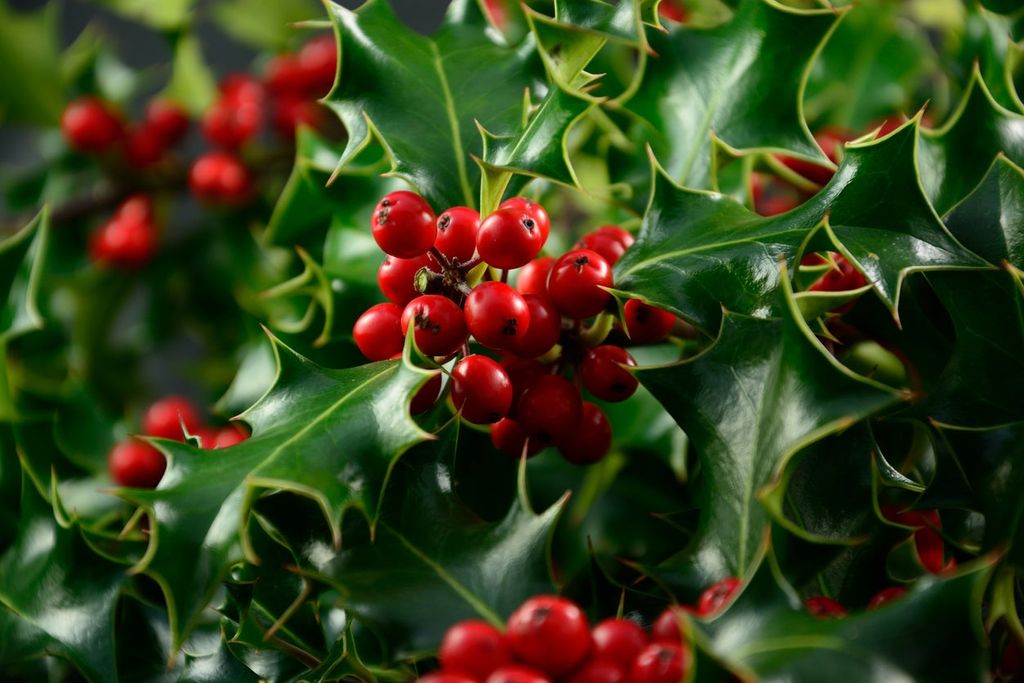
American holly is the familiar Christmas holly with glossy green, spiny leaves, and bright red berries. Native to the bottomlands and swampy margin areas of the eastern and central U.S., this tree forms a pyramidal shape and can grow to notable size in the wild. This tree is dioecious, with separate male and female plants. Pollination from male pollen is necessary for the female trees to flower and produce the signature red or orange berries. If you grow it in your landscape, you will need plants of both sexes if your goal is to have berries.
American holly is normally planted from potted nursery specimens in the spring or early fall. It has a medium growth rate, adding 12 to 24 inches per year until reaching its mature size of 30 feet or more.
:max_bytes(150000):strip_icc():format(webp)/GettyImages-831797912-e5ad8605328140479a1c537daaebab17.jpg)
American Holly Care
Although American holly tolerates a wide range of soils, it does not accept alkaline conditions or dense, poorly drained soil. But if you have a well-drained soil that you can acidify, this plant will do marvelously in most sunny or part shade locations. The plant generally loses density in shady conditions, but in hot southern climates, it likes a few hours of shade in the afternoon. In cold climates, plant American holly where it will get some shelter from winter winds.
If planting for a screen or in groups, space the plants about 5 feet apart in a prepared hole two or three times larger than the container root ball. Backfill the hole with soil blended with organic material plus an acidifying amendment, if needed. Keep the plant moist until established.
Light
American holly will grow nicely in most full sun to part shade locations. In hot climates, plants will do best if they get some afternoon shade.
Soil
Give this plant a well-drained, acidic soil. If necessary, amend the soil to acidify it, or be prepared to feed it regularly with an acidifying fertilizer.
Water
American holly needs to be kept moist while it getting established, but after the first year or so, watering once a week (about 1 inch) is sufficient. This plant has a good tolerance for occasional drought.
Temperature and Humidity
American holly generally does well throughout the temperature range of its hardiness zone, 5 to 9.
Fertilizer
Early each spring, American holly will appreciate an application of an acidifying fertilizer.
American Holly Varieties
There are hundreds of different cultivars of American holly; the pure species plant is almost never planted. Holly cultivars are normally sold as either female (berry-producing) or male plants (necessary to pollinate the females). These are some popular varieties:
‘Cobalt’ is a male cultivar with good cold hardiness (down to minus 25 degrees Fahrenheit).
‘Jersey Knight’ is one of the most popular male cultivars, growing to 7 to 10 feet over 10 years.

‘Miss Courtney’ is by some standards considered the best female cultivar. It grows 20 to 30 feet and is cold hardy down to minus 20 degrees Fahrenheit.
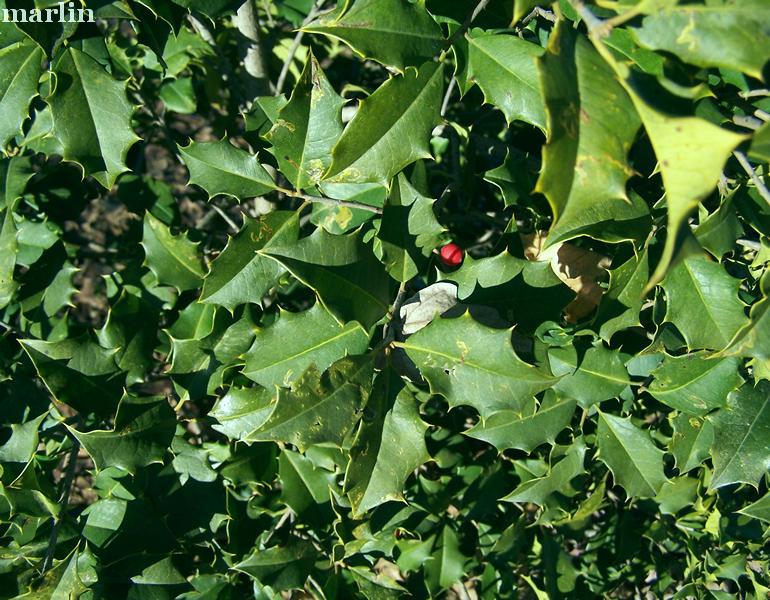
‘Morgan Gold’ is a yellow-berried female cultivar growing to 25 feet.
‘Maryland Dwarf‘ is a diminutive, 2-foot-tall plant with few berries.
‘Cardinal Hedge’ is a dwarf cultivar, growing to only about 4 feet, excellent for foundations and small hedges.
In order to produce berries, female hollies will require a male plant within 30 to 40 feet. It is fine to plant a single male to pollinate all your female hollies.
SOURCE: The SPRUCE
 Sew Colorful