
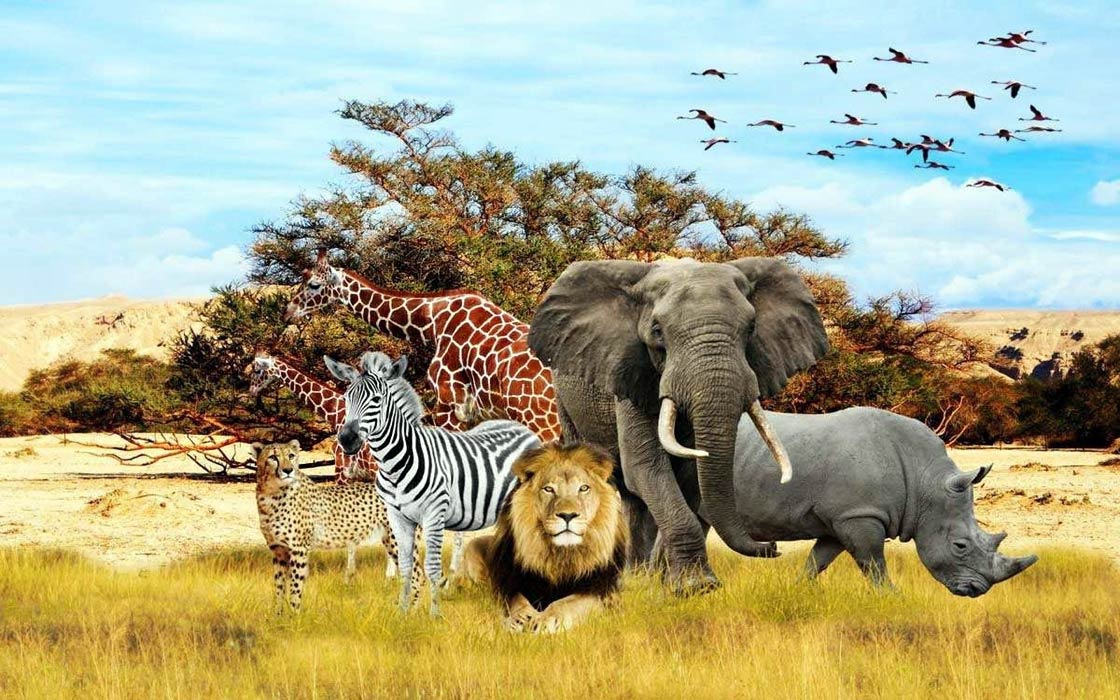
The Edible Dormouse (Glis glis) is able to hibernate the longest – up to 11-months of the year when food availability is low.
To be able to pull of this feat, they double or even triple their body weight before hibernation. During hibernation they are able to reduce their metabolic rate and the animal may stop breathing for periods of up to an hour at a time.
Japanese Macaques play with snowballs for fun.
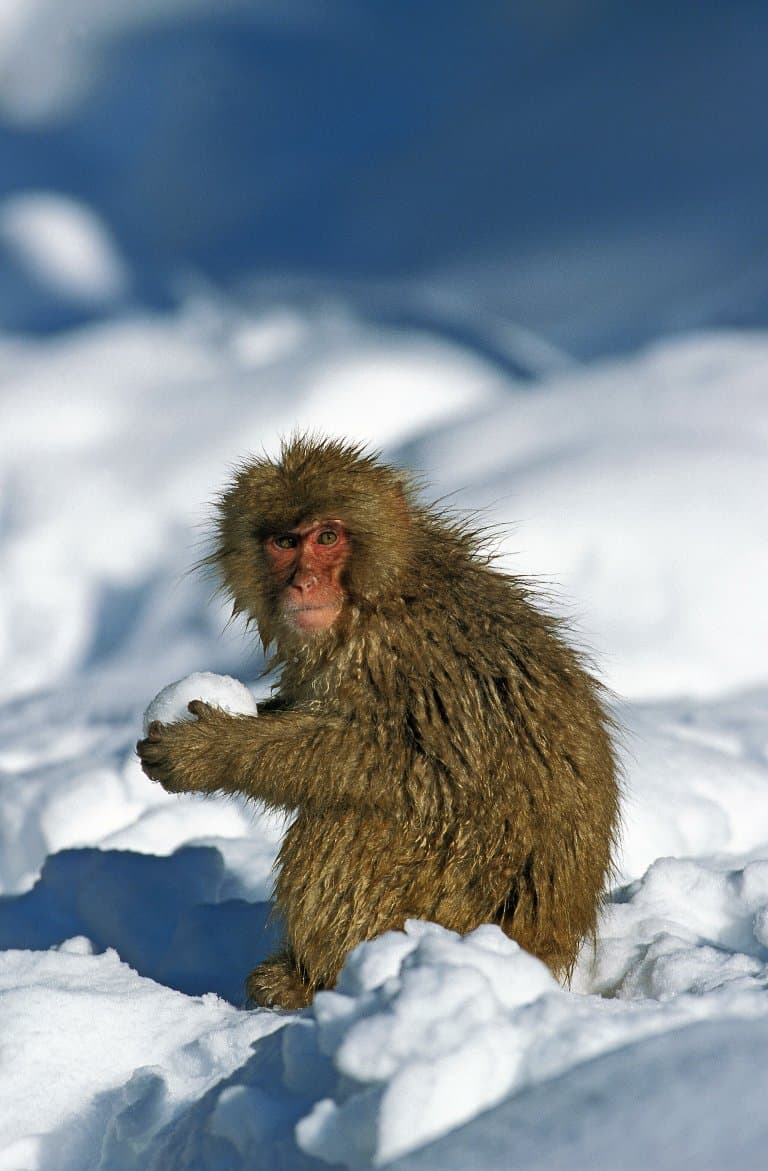
These snow monkeys have been observed rolling up snowballs, then pushing them down hills just for the heck of it. Others gather lumps of snow in a ball and carry them around, proudly sometimes to the envy of other monkeys who try to steal it.
Sperm whales are the world’s largest predator.
They can be up to 20m long and weigh up to 80 tons. These giant whales dive down to almost 3,000m below the surface where they hunt giant squid. Giant squid can be the same size or bigger than sperm whales and will fight viciously with them. Adult whales can be seen with scars on their heads from the beaks of giant squid.
The largest insect to ever live was a “dragonfly” with a wingspan of over 2 and a half feet across.
They are called Meganeuropsis and were around 247 million years ago. They were proficient predators, with large mandibles that they used to capture fish, amphibians and insects.
Koala’s have fingerprints almost identical to human.
It is so hard to distinguish between the fingerprints of koalas and humans that even under a microscope it is hard to tell. There are even reported cases of a koala’s fingerprints confusing forensics at crime scenes.
Greenland sharks are the longest living vertebrates on earth, with one individual thought to be over 400 years old
Greenland sharks are giant, reaching up to 5m in length, and live in the cold deep waters of the North Atlantic. They are rarely seen, and little is known about them.
The blood ‘Dracula ant’ has the fastest recorded animal movement when it snaps its mandible.
This cannibalistic ant can go from zero to 200mph in 0.000015 seconds when it snaps its mandibles, that’s roughly 5,000 times faster than human’s blink. This is the fastest recorded movement in the animal kingdom.
The box jellyfish is considered the most venomous marine species in the world.
These cube shaped jellyfish have long tentacles and can be over 3m in length. Their toxin, delivered via stinging cells in their tentacles, is so potent that many die before they can even reach the shore.
The Japanese Spider Crab has the longest leg span of any arthropod.
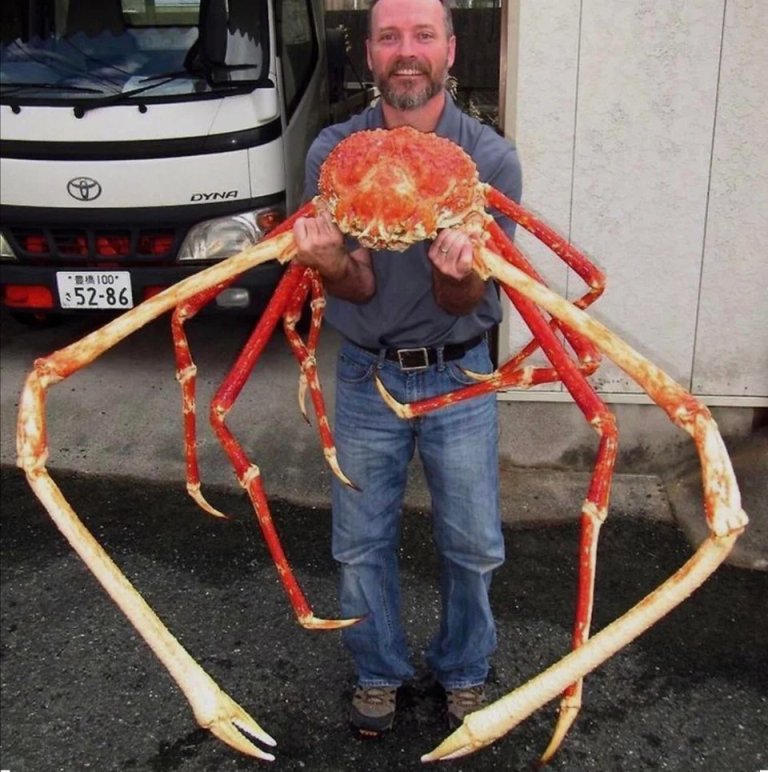
From the tip of one claw to the other can be as long as almost 4m! Japanese spider crabs have 10 legs stretching out from a central body, giving it its spider like appearance. They live deep in the oceans south of Japan.
Some albatrosses are lesbians.
Albatrosses form bonds for life, returning to the same place every year to raise their young. Some of these bonds are between two female albatrosses, with a study finding that in one breeding area 31% of pairs were two females.
Some corvids (crows, rooks, ravens etc,) can understand physics.
Corvids are highly intelligent. They can use tools, solve puzzles, recognize faces, and even understand physics. Tests show that rooks have the same level of understanding of physics as a 6-month-old baby, which is higher than some apes.
Sheep can recognize faces.
As social animals, sheep are capable of recognizing familiar and unfamiliar faces. Studies even suggest that they miss other sheep when they are taken away for a long time afterwards.
Tardigrades can survive in space and go without eating for more than 10 years.
Tardigrades are microscopic animals with crazy endurance abilities. They can survive in temperatures as high as 149oC or as low as -272oC and pressures 6 times more intense than the bottom of the ocean. They also look like tiny bears!
Duck-billed platypus don’t have nipples, instead they concentrate milk to their belly and feed their young by sweating it out.
The milk emerges from pores in the skin of the abdomen which the platypus puggles then lap up.
Echidnas are relatives of duck-billed platypuses and have a beak, spikes, a kangaroo-like pouch, and lays eggs.
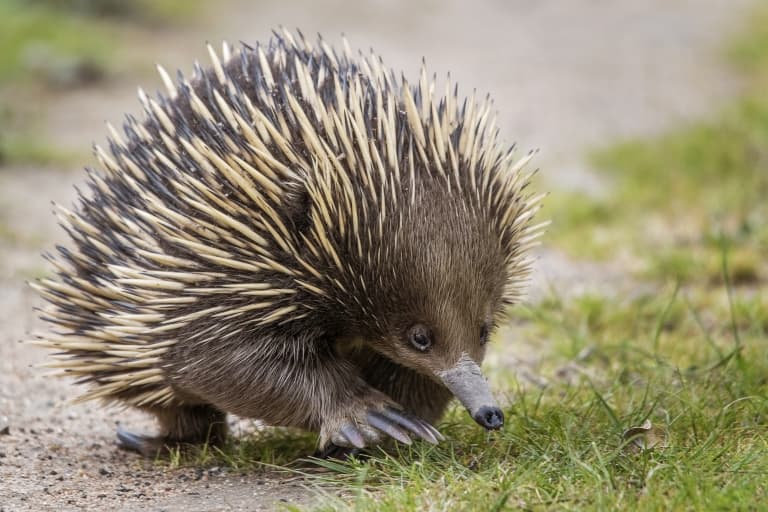
They are small at just 30–45cm and are known as spiny anteaters. One of the few egg-laying mammals, echidna lay a tiny egg which is then transferred into a kangaroo-like pouch where it then hatches.
Rabbits don’t have pads on their paws. Only fur.
Rabbits are a bit like hobbits, in that they have furry feet! They are the only land mammals that do not have paw pads. Paw pads are thought to help animals run faster, whereas rabbits move in a different way, and the thick fur still provides cushioning.
The Yangtze giant softshell turtle is the biggest freshwater turtle in the world.
It weighs between 330 to 485 pounds and is over 39 inches in length. They are found primarily in the area of the Yangtze River in China.
Pea Crabs are miniature crabs that spend their whole lives inside oysters, clams, and mussels.
Named because it is the size of a pea, this tiny crab relies entirely on its host for food.
The Mariana snailfish is the deepest fish in the ocean, living up to around 8,000m below the surface.
They live down in the deepest trenches of the ocean where they hunt invertebrates, such as crustaceans and shrimp.
The shoebill stork can swallow baby crocodiles whole.
These huge birds are over a meter tall (up to 5 feet) and have a wingspan of more than 2 m (almost 8 feet!). Its name comes from its huge beak which is over 20cm long and almost that wide. Along with lungfish, it also eats baby turtles and baby crocodiles whole.
Lungfish are the only fish that have both lungs and gills.
This allows them to survive when the water in their ponds/lakes dries up.
Electric eels are in fact not eels, and give a shock strong enough to knock out a horse.
In the Tennessee Aquarium an electric eel’s tank has been hooked up to a computer programmed to send out a tweet whenever the eel produces enough electricity.
The yellowhead jawfish incubates its eggs in its mouth.
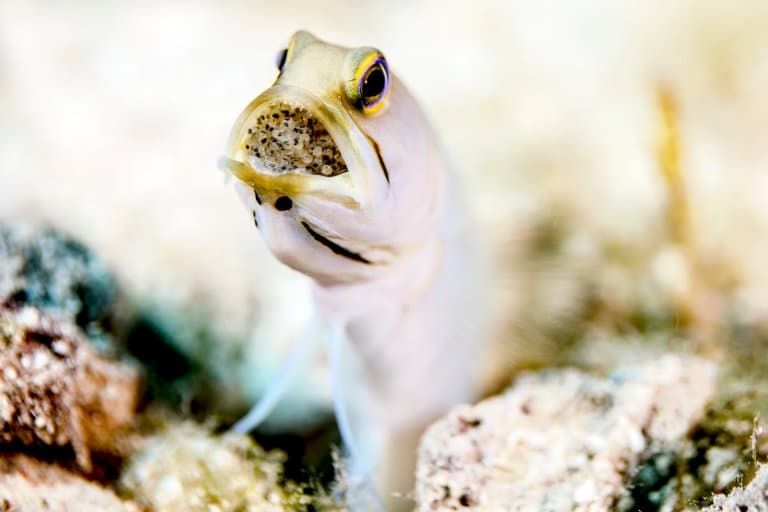
The male gathers up all of the eggs once they’ve been fertilized and stores them in his mouth until they hatch.
The patu digua is thought to be this smallest spider in the world at just 0.37 mm.
This Colombian spider is about one fifth the size of the head of a pin.
Vampire bats share blood with their friends.
Vampire bats need to eat blood at least every 48 hours to survive. Bats will share blood after a good meal with another bat that’s fed them in the past.
The U.S. military trained bottlenose dolphins.
Bottlenose dolphins were used in both the Vietnam and the Gulf to detect enemy swimmers trying to plant explosives on ships.
Wojtek the bear was a corporal in the polish military during WWII.
Wojtek was brought by polish shoulders while in Iran. He was made an officer so that he was allowed rations and eventually was promoted to corporal. He helped out by carrying boxes of ammunition.
Horned lizards shoot blood out of their eyes.
To scare of predators, this lizard shoots blood out of its eyes.
Cuckoo birds hide their eggs in the nests of other species.
The other bird species then raises the cuckoo chick as if it were its own, and the cuckoo mother doesn’t have to do any of the work.
Elephants mourn their dead.
Elephants will return to the place where family members died and stand in silence over the bones, sometimes bowing their heads.
Meerkat parents train their offspring to hunt scorpions.
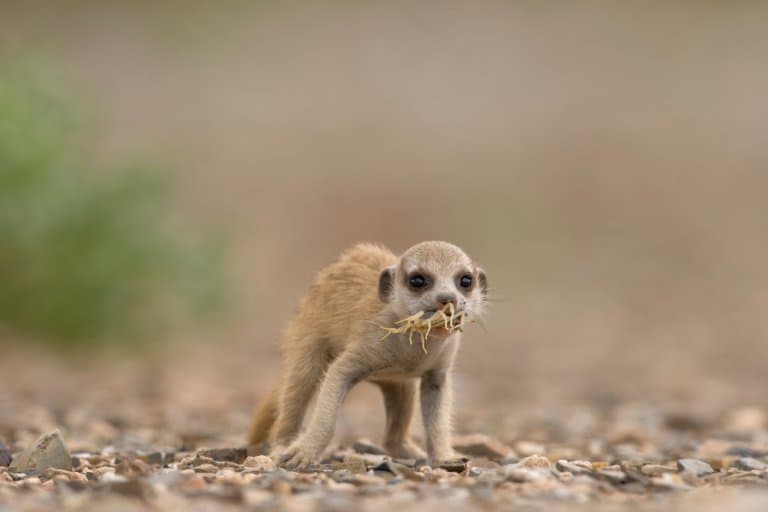
They will bring back dead or almost dead scorpions back to the younger ones so that they can practice killing them without getting stung.
Only 3-5% of mammals are monogamous.
The majority of mammals are not monogamous, making humans unusual.
Gorillas have been seen dismantling traps set by poachers.
Poaching is a big problem for gorillas, but young gorillas have learnt how to trap and dismantle snares.
The earliest found depictions of dogs come from 8,000 years ago.
Dogs have been human-kinds best friend for a long time, with a carving in a rock face in Saudi Arabia showing a man hunting with 13 dogs. Two of them even have leads!
Cats were domesticated 9,500 years ago in Ancient Egypt.
They were worshiped in Ancient Egypt and some historians report that it was illegal to kill a cat.
Emperor penguins are the world’s biggest penguins, and they trek 31–75 m across the Antarctic to reach breeding colonies.
The impressive emperor penguins reach 100 cm (39 in) in length and weigh 49 to 99 lb. They breed during winter, when they emerge from their more natural habitat in the ocean to trek long distances over treacherous ice.
Yaks are specially adapted to high altitudes, with a huge lung capacity and small red blood cells.
Native originally to Tibet, these giant oxen-like animals live at high altitudes in the Himalayas (4,000–6,000 metres). They are specifically adapted to the low oxygen levels with a lung capacity that is ~3 times that of normal cattle, and have smaller red blood cells to improve oxygen transport.
Cuvier’s Beaked whales are one of the deepest diving mammals and can collapse their lungs to survive the high pressure.
One of the deepest diving mammals, one individual was recorded diving down to 9,816ft below the surface. The pressure at these depths is so high that in order to survive it they have to collapse their lungs.
Orangutans are the heaviest tree-dwelling animals.
There are three species of orangutan and adult males of all three typically weigh around 165lb while females are 82 lb. They are 5ft tall and have a huge arm span of 6ft. They spend most of their time up in the canopy, making them the heaviest tree-dwelling animal.
Chimpanzees are very intelligent and make all kinds of tools.
For example, some use long sticks to fish out termites from their mounds. Other chimps have been recorded creating “spears” to hunt bushbabies!
Shrike’s impale their prey on sticks to save them for later.

Also known as “butcherbirds” they are famous for being fairly brutal songbirds. They catch all kinds of animals, including crickets, lizards, and small birds, and impale them on sticks to save them for later.
Vultures urinate and defecate on their own legs and feet to cool off on hot days.
This a cooling mechanism called ‘urohydrosis’. Weirdly this can also help kill any bacteria picked up from walking through dead animals which they prey upon.
The wood frog spends 7 months of the year frozen.
These Alaskan frogs freeze almost completely at the start of winter, with two-thirds of their body water turning into ice. To all intents and purposes, they seem dead; their heart stops beating, and their blood flow stops. However, once winter starts to thaw so do they and they hop back to life.
Certain animals have anti-freeze proteins that allow them to survive extreme temperatures.
These anti-freeze proteins prevent water in the cells of the animals from crystalizing and forming ice. Examples of animals with this superpower include the winter flounder and the eelpout.
Honeypot ants swell up to a huge size with food.
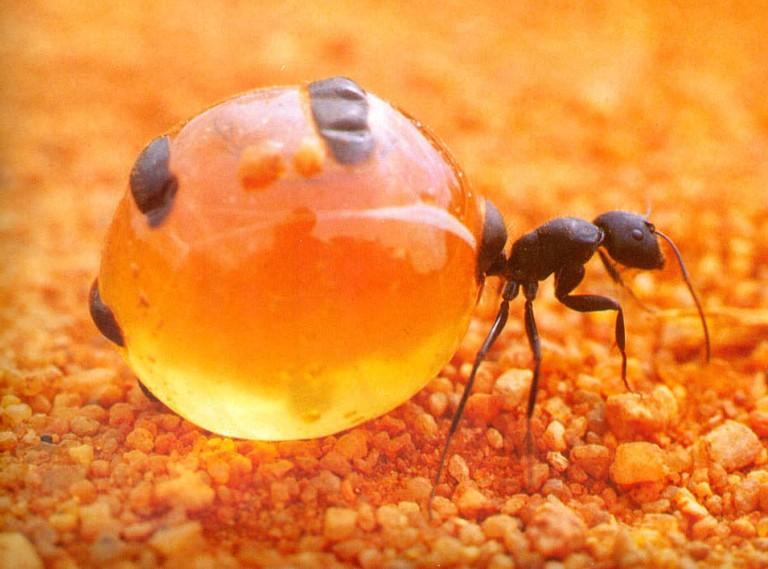
Honeypot ants have to be seen to be believed. During wet season, certain ants consume huge amounts of nectar, making their abdomens swell up to the size of a grape. Then, during dry season, they provide the other ants with food by throwing the nectar back up again. Yum!
The lesula, discovered in 2007, has giant human like eyes and a blue bottom.
This relatively newly discovered monkey lives in the Congo. The lesula eyes are very distinctive because of their human-like appearance, as are their bright blue bums.
The Donald Trump caterpillar looks identical to the ex-president’s hair.
This species of caterpillar, prior to 2016, was known as the Flannel Moth Caterpillar (Megalopyge opercularis). It gained popularity as it is very furry and bright orange, giving it an uncanny resemblance to Trump’s hair. This ‘fur’ however, is actually composed of multiple venomous ‘hairs’. Grabbing hold of one of these caterpillars is a painful experience.
Bees have 5 eyes. 2 at the front like a fly, and 3 smaller eyes like a spider.
The three ‘ocelli’ eyes on the top of its head detect light, so the bee can sense if it’s being approached by a predator.
Giant vampire bats lived 100,000 years ago and had a wingspan of 20 inches.
These giant bats were roughly 30% larger than the modern vampire bats. The remains of one were recently found in a cave in Argentina.
There are no ‘male’ Mourning geckos.
They are an all-female species, as they are ‘parthenogenetic’, meaning it can reproduce without males. Around 70 species in the world have shown this behavior, including some crabs, snails and the Komodo dragon.
There are an estimated 8.7 million species on earth and more than 80% of them are undiscovered.
Based on current data, complex statistics, and models we can predict how many species there are on Earth, telling us how many are still left to be found. It will likely take another 500 years to find them all.
SOURCE: FACT ANIMAL
 Sew Colorful
LikeLiked by 1 person
bookmarked for the morning
LikeLiked by 1 person
4 men charged 4 years AFTER stealing Churchill’s gold toilet. the toilet itself has not been recovered
entire article
LONDON — Four people have been charged after a fully functional solid gold toilet worth nearly $6 million was stolen from Blenheim Palace, the birthplace of former Prime Minister Winston Churchill, police said.
The theft happened in September 2019, when the solid gold toilet named “America,” an art piece by Maurizio Cattalan, had been installed as part of an exhibition where people were invited to use the fully functioning toilet at Blenheim Palace, approximately 65 miles northwest of London.
The toilet had only been installed for two days before the theft occurred and the Thames Valley police received a report of the burglary at the palace at 4:57 a.m. on Sept. 14, 2019, saying that the offenders broke in overnight and left the scene of the crime at 4:50 a.m.
“The piece of art that has been stolen is a high value toilet made out of gold that was on display at the palace,” said Detective Inspector Jess Milne of Thames Valley Police at the time of the theft. “Due to the toilet being plumbed in to the building, this has caused significant damage and flooding. We believe a group offenders used at least two vehicles during the offense.”
Now, more than four years after the heist, the Crown Prosecution Service has formally charged four men in relation to the theft of the solid gold toilet.
“James Sheen, 39, has been charged with one count of burglary, one count of conspiracy to transfer criminal property and one count of transferring criminal property,” the CPS said on Monday. “Michael Jones, 38, has been charged with one count of burglary. Fred Doe, 35, and Bora Guccuk, 39, have both been charged with one count of conspiracy to transfer criminal property.”
“Criminal proceedings against James Sheen, Michael Jones, Fred Doe and Bora Guccuk are now active and they each have the right to a fair trial,” the CPS advised. “It is extremely important that there should be no reporting, commentary or sharing of information online which could in any way prejudice these proceedings. The function of the CPS is not to decide whether a person is guilty of a criminal offence, but to make fair, independent and objective assessments about whether it is appropriate to present charges for a criminal court to consider.”
Before the theft, visitors could book a three-minute appointment to use the toilet, which had been a popular feature of the exhibition when it was displayed at the Guggenheim in New York City.
Shortly after the art installation was stolen, Thames Valley police arrested a 66-year-old man in connection with the incident. That individual has not been charged.
“The CPS assessment of any case is not in any sense a finding of, or implication of, any guilt or criminal conduct,” the CPS said of the standing proceedings. “It is not a finding of fact, which can only be made by a court, but rather an assessment of what it might be possible to prove to a court, in accordance with the Code for Crown Prosecutors.”
Before the theft, in August 2019, Edward Spencer-Churchill, the brother of the Duke of Marlborough who resides at Blenheim Palace, spoke to The Times, saying, “It’s not going to be the easiest thing to [steal]. Firstly, it’s plumbed in and secondly a potential thief will have no idea who last used the toilet or what they ate. So no, I don’t plan on guarding it.”
The four men are scheduled to appear at Oxford Magistrates’ Court on Nov. 28.
To this day, the toilet has not been found.
https://abcnews.go.com/amp/International/4-charged-after-fully-functional-solid-gold-toilet/story?id=104685050
LikeLiked by 1 person
Good night!
LikeLiked by 1 person
Good Night Filly!
LikeLiked by 1 person
I am adding a short daily prayer to the board. I would invite each of you, if you wish, to also add one or maybe two of your own liking. I do not want to stifle anyone but please limit yourself to one or two religious postings. here’s one I found that I liked.

LikeLike
LikeLike
LikeLike
LikeLike
LikeLike
LikeLike
Good Night All!
LikeLike