
:max_bytes(150000):strip_icc():format(webp)/growing-and-using-calendula-1402626-hero-6c4c4cf97a8940aaabad6975a27358b1-975ec0f7f1144eef8553df0111e7136f.jpg)
Marigolds (Tagetes spp.) are among the most common and reliable of all bedding flowers. These cheerful flowers with warm colors and fern-like foliage are true annuals, completing their life cycles in a single growing season. The size and construction of the blooms can vary considerably, from tiny single-petal flowers of the signet marigolds to the large 4-inch double-petal blossoms of the African marigolds, but all show their membership in the aster family with flowers demonstrating the characteristic daisy-like appearance. Marigolds are typically planted from nursery starts or seeds planted in the spring after the soil can be worked. These fast-growing plants will achieve blooming maturity within a matter of a few months when planted from seeds. For earlier outdoor blooms, start the seeds indoors six to eight weeks before the last frost.
Marigold Care
Marigolds are very low-maintenance once established, and they are notably pest-free. In fact, they are sometimes planted as a deterrent to pests that attack other plants. Marigolds can bloom almost non-stop and will keep going all summer, until frost. To achieve that non-stop flowering, keep your marigolds deadheaded. Flowering may decrease slightly during the heat of summer but generally resumes in full force as cooler weather arrives.
Tall varieties of African marigold are sometimes planted by stripping off the lower leaves and burying the stems extra deep. This encourages an extra sturdy root system and minimizes the need for staking the plants.
Light
For the most flowers and the healthiest plants, plant your marigolds in full sun. Shady conditions will cause the plants to become leggy and to flower less profusely.
Soil
Marigolds are not fussy. Any good garden soil (and a little water during dry spells) should keep them happy, as long as the soil is not too acidic. Keep the soil pH roughly neutral, from 6.0 to 7.0. They also don’t need a soil that is particularly rich in organic matter and seem to grow better in a leaner soil.

Water
When you first plant your marigold seeds or plants, make sure they get regular water. Don’t leave them in dry soil for more than a couple of days. If it is particularly hot and sunny, water new plants every day. Once they have had a few weeks to establish a good root system, they will be more drought-tolerant, but they will still bloom best if given weekly water.
Temperature and Humidity
Marigolds are heat-loving plants that thrive in summers throughout their growing range, zones 2 to 11. These true annuals may become a bit subdued during the height of summer, especially in areas with hot summers, but the flowering picks up again when the weather cools in later summer and fall.
Marigolds tolerate a wide range of humidity levels, but they may get powdery mildew in damp or humid summers. Planting in full sun and providing room for airflow will lessen this problem. These native plants of Mexico prefer relatively dry air.
Fertilizer
Your marigolds won’t need any supplemental fertilizer unless your soil is extremely poor. The best thing you can do to keep them in flower is to deadhead regularly.
Types of Marigolds
There are several species and divisions of marigold, with many cultivars of each. Most are moderate in height, but there is a good amount of variety among the different types. You can find short bedding marigolds that grow only 4 to 6 inches tall and taller varieties that can reach 48 inches and make nice cutting flowers. The three most commonly grown types are African, French, and signet marigolds, representing three different Tagetes species:
African marigolds (Tagetes erecta): With large, pom-pom flowers on medium-sized to tall plants, African marigolds (also known as Mexican marigolds) are popular for both the border and as cut flowers. They can grow up to 4 feet tall and have flowers more than 4 inches across. Colors include yellow and orange. ‘Antigua’ Series are African marigolds with unusually profuse blooms.

French marigolds (Tagetes patula); French marigolds are prized for their long, prolific blooms. They tend to be short, bushy plants, from 5 to 18 inches tall. They have purple-tinged stems with double flower heads in yellow, orange, and mahogany that are about 2 inches across. ‘Naughty Marietta’ is a ruffled, deep-yellow French marigold with maroon splashes in the center.

Signet marigolds (Tagetes tenuifolia): The edible marigolds are the signets. They look totally different from bedding marigolds, with lacy leaves and small, single, daisy-like flowers. They come in yellow and orange, with fitting cultivar names such as ‘Orange Gem,’ ‘Tangerine Gem’, ‘Red Gem’, and ‘Lemon Gem’. ‘Gem’ Series are single-flowered signets with very fern-like foliage. There have been some hybrids on the market recently with an expanded palette of colors, such as shades of cream, burgundy, and bi-colors, but the flavor is not always equal to that of the ‘Gem’ varieties.
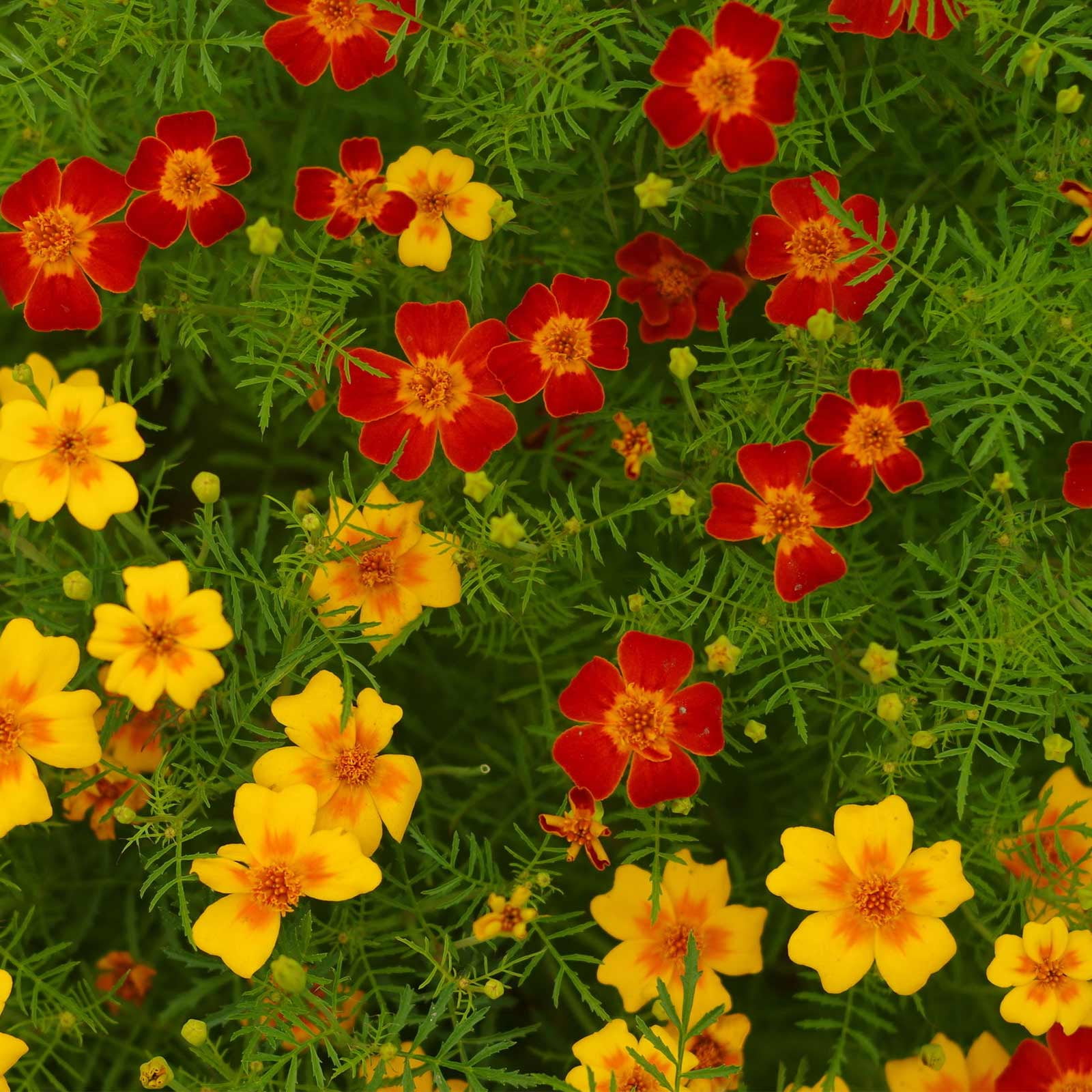
There are also hybrid crosses between T. erecta x T. patula that combine the large flowers of the African marigolds with the more compact stature of the French marigolds.
SOURCE: The Spruce
 Sew Colorful
hubby is grilling chicken breasts and I’ve got mashed potatoes and green beans on the stove and biscuits in the oven.
dessert is white cake with chocolate frosting with pecans.
LikeLiked by 2 people
Sounds yummy! I picked up a single-serving of Stauffer’s lasagna that I’m going to m/w and have some lope and melon for dessert!
LikeLiked by 1 person
sounds good too!
LikeLiked by 1 person
Spoilin’ that man!!! :8-)
LikeLiked by 1 person
LOL…
he does the grilling!! he spoils me too
LikeLiked by 1 person
Good night, Pat!
LikeLiked by 1 person
Good Night Filly!!
LikeLiked by 1 person
I am adding a short daily prayer to the board. I would invite each of you, if you wish, to also add one or maybe two of your own liking. I do not want to stifle anyone but please limit yourself to one or two religious postings. here’s one I found that I liked.

LikeLike
LikeLike
LikeLike
LikeLike
LikeLike
LikeLike
LikeLike
LikeLike
LikeLike
LikeLike
LikeLike
Good Night All!
LikeLike
Good night y’all! The Village internet was so slow I couldn’t post a Howdy earlier today.
We had a kitty cat named Marigold one time.
Also had one named Rosy, Posy, Daisy, Dandelion, Tiger Lily.
If I ever get another – it will either be Buttercup or Daylily….another orange cat most likely.
LikeLiked by 2 people
LOL…sounds like good names.
my granddaughter (when she was 3) named their kitten Chip. they found him and the litter in the barn. the other kitties were Pickles, Bacon and Raisin–her favorite foods at the time…lol
LikeLiked by 1 person
Love Marigolds
LikeLiked by 1 person
i have them planted in the cinder blocks surrounding our little garden. they are supposed to repel deer, but this year we saw hummers flying around them.
LikeLiked by 1 person