

The gladiolus is a classic perennial known for its tall flower spikes and large, colorful blooms! A great cutting flower, the gladiolus looks spectacular in summer bouquets. Here’s how to grow gladioli in your garden.
About Gladiolus
Part of the iris family (Iridaceae) and commonly known as “glads,” these lovely flowering plants are available in a multitude of colors and sizes—from the smaller hybrids that fit perfectly in containers to the large-flowered Grandiflora hybrids, which send out huge spikes of blooms in a range of colors.
The most common gladioli typically reach between 2 and 5 feet in height, sporting flowers that also range in size—from “miniature” blooms less than 3 inches in diameter to “giant” flowers greater than 5 inches across! The taller varieties, which need to be staked, are often placed in the back of a garden to nicely complement shorter plants.
Gladiolus Winter Hardiness
The accepted hardiness zone for the classic Grandiflora gladioli (your typical garden glad) is zone 8, but it’s well known that by covering the corms with a good mulch, you can keep them alive in zones 6 and 7 and sometimes even zones 5 for certain varieties such as “Nanus Hybrids.” In colder zones, most gladioli corms should be dug up in the fall, stored, and replanted the following spring
Planting
For the best blooms, plant glads in full sun (6 to 8 hours of sunlight per day) in well-drained soil that’s moderately fertile. They will not do well in heavy, soggy soil. Mix compost (humus) into your soil to improve its consistency and fertility.
When to Plant Gladiolus
Start planting gladiolus corms in the spring, once the danger of frost has passed and the soil has warmed to at least 55°F (13°C).
From your last frost date to early summer, plant another round of corms every 10 days or so. This will result in continuous blooms through early fall!
Depending on the variety, it takes between 60 and 90 days from the time glads are planted for the corms to root, grow, and bloom.
How to Plant Gladiolus
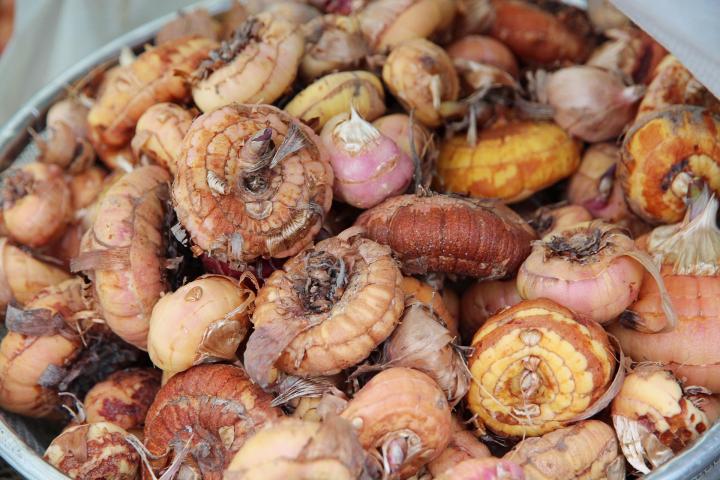
Ready your garden by using a garden fork or tiller to loosen the soil to about 12 to 15 inches deep. After loosening the soil, mix in a 2- to 4-inch layer of compost or aged manure.
To ensure large-sized blooms, plant corms that are 1¼ inch or larger in diameter.
Set the corm in the hole about 4 inches deep with the pointed end facing up. Cover with soil and press firmly.
Space the corms 6 to 8 inches apart.
If you grow gladioli primarily for cut flowers, plant them in rows. It’s easier to tend the plants and to harvest the flowers.
If planted with other flowers in borders or annual beds, plant the corms in groups of 7 or more for the best effect.
Water the corms thoroughly at planting.
If you’re planting tall varieties, be sure to stake them at planting time. Be careful not to damage the corms with the stakes.
Growing
How to Grow Gladiolus
Put a 2- to 4-inch layer of mulch around your gladioli to keep your soil moist and help prevent weeds.
If you get less than 1 inch of rain a week, water your plants regularly throughout the summer. Otherwise, water them moderately when in growth to keep the soil moist.
Remove the faded/dead flowers to ensure continuous blooms. Once all the flowers on a stalk are gone, cut the stalk off at about 2 to 3 inches above the soil.
Be sure to leave the plant intact so it can mature and grow the corms for the next season.
Winter Protection for Gladiolus
If you live in USDA Hardiness Zone 8 or warmer, put down a layer of hay or straw for winter protection. Gladiolus can remain in the ground through winter, provided a hard freeze (28°F or colder) isn’t common in your area.
In colder regions (Zone 7 or colder), dig up gladioli corms once the foliage has faded after the first fall frost. A light frost will kill the foliage, but not the rest of plant. Be sure to dig up the gladiolus corms before a hard freeze (28°F), or the plants could be fatally damaged.
All that said, many gardeners who live in the “border” zones 6 and 7 have tried leaving their glads in the ground and found that they survived; this is a judgement call and based on your microclimate, your variety of gladiolus, and climate shifts.
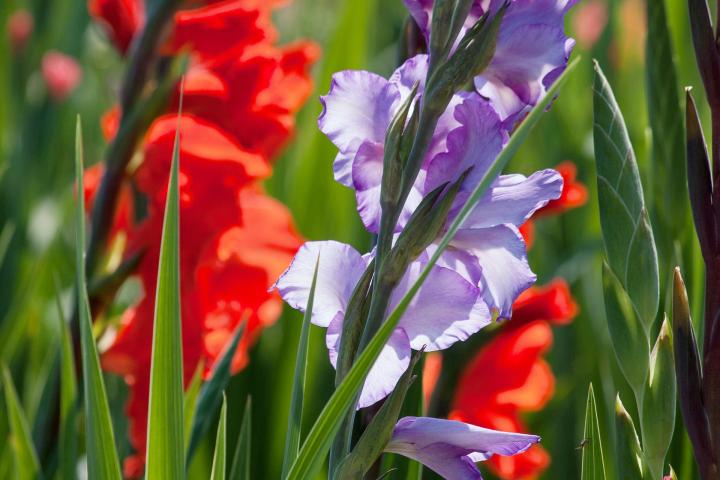
Digging Up and Storing Gladioli Corms
To dig up the gladioli corms for winter storage, follow these tips:
Use a spade and dig up the entire plant, grasping the top to pull it out of the soil. Avoid bruising or injuring corms while digging. Shake off all loose soil (do not wash them off) and discard damaged corms. Cut the stalk down to 1 to 2 inches above the corm. Save the small cormels separately if you so desire. These will bloom in 2 to 3 years if you replant them each spring.
Allow the corms to dry in the sun for 1 or 2 days if the weather agrees. Sift out excess soil and place corms in wooden flats or trays. Cure in a warm and airy location for 2 weeks at a temperature of 80 to 85°F (27 to 29°C). Remove and throw away the oldest bottom corms (from the base of the new one).
Don’t remove the husks on the corms.
Dust the corms with a fungicide (“bulb dust”) to avoid disease problems. Place dust and bulbs in a paper bag and shake vigorously.
Store the corms in paper or cloth bags, pantyhose, or old onion sacks. Stack or hang the containers so air can move among them. Store the corms at 35 to 45°F (2 to 7°C) in low humidity. A cool basement is quite suitable. Do not allow corms to freeze.
Replant these corms in the spring for another year of beautiful blooms.
Varieties
Gladioli come in a variety of sizes and colors, with the most popular being part of the follow hybrid groups:
Grandiflora Hybrids: These are the classic gladioli that produce a plentiful amount of large (5- to 6-inch) blooms in a range of colors. The plants produce flower stalks that reach up to 4 feet in height and are winter hardy to Zone 7.
Dwarf Grandiflora Hybrids: These miniature glads are a great choice for containers and cutting gardens, as their flowers are about half the size of Grandifloras and their shorter stalks don’t typically require staking. They are also winter hardy to Zone 7. Glamini gladioli are included in this group; they are pest resistant and will bloom in full sun or partial shade.
Nanus Hybrids: Hardy to Zone 5, these smaller gladioli look a lot like Grandifloras, but do not produce as many flowers. They tend to grow no larger than about 2 feet in height, which makes them perfect for containers or small spaces.
Some specific gladiolus varieties of note include:
‘Black Star’, which has deep purple-red blooms
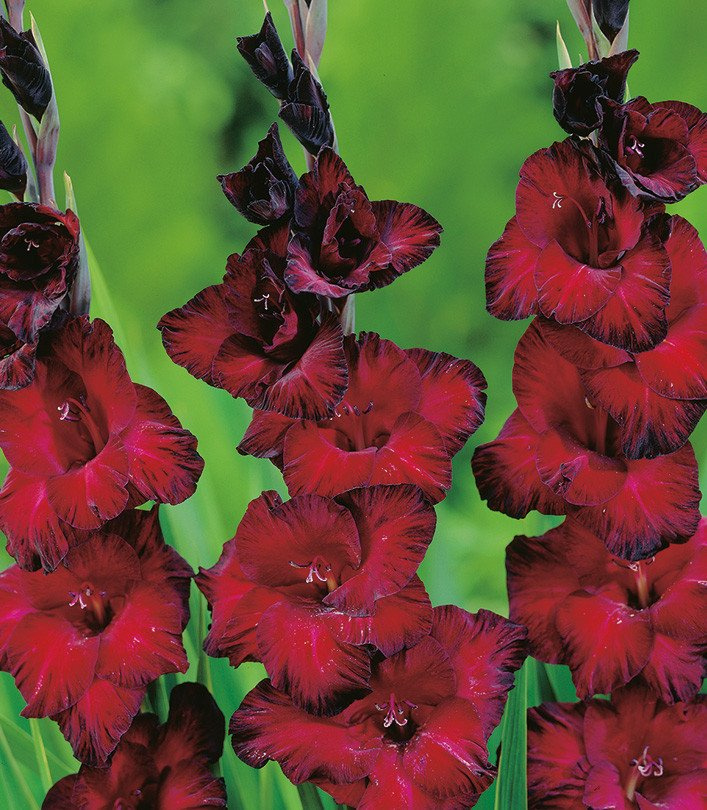
‘Candyman’, for its beautiful, deep pink flowers
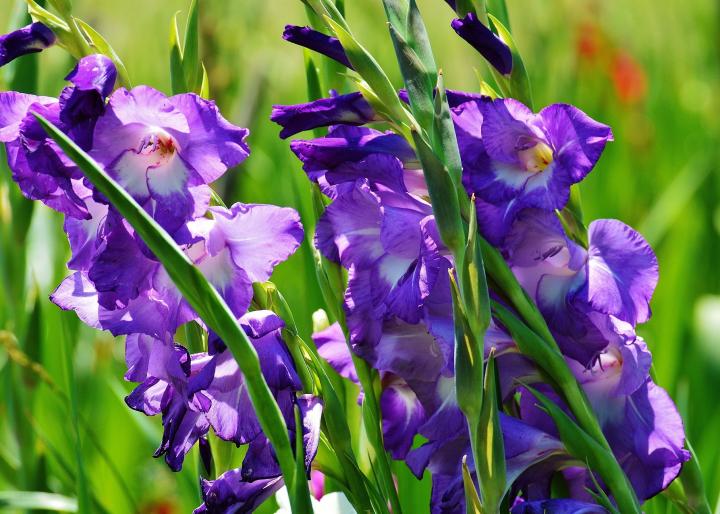
‘Costa’, which sports ruffled flowers in blue-purple

‘Dream’s End’, which makes a good background plant because its flower spike is up to 3 feet tall (and it has pretty light orange flowers with large yellow centers)
‘Fun Time’, which has yellow flowers edged with red
‘Green Time’, for its unusual lime-green flowers
‘Prins Claus’, which has white flowers with splashes of pink on its petals
‘Priscilla’, which produces off-white flowers with yellow center and a pink edge

Harvesting
To cut glads for bouquets, follow these tips:
Cut the flower stalks early in the morning or at night, not during the heat of day.
Use a sharp knife and bring a bucket of lukewarm water to the flower bed; cut diagonally through the stalks and place in the bucket.
Cut stalks with only one or two open flowers. The rest of the buds will open after you put them in a vase. Leave at least four leaves on the plant in the ground if you want to re-use the corms.
Place the bucket with the flowers in a cool dark place for a few hours before arranging them in a vase.
Remove lower fading flowers and cut about 1 inch off the bottom of each flower stalk every few days.
SOURCE: ALMANAC
 Sew Colorful
LikeLiked by 1 person
LOL
LikeLiked by 1 person
LikeLiked by 1 person
LikeLiked by 1 person
LikeLiked by 1 person
LikeLiked by 1 person
this looks good! I bookmarked!!
LikeLiked by 1 person
If you try it let me know
LikeLiked by 1 person
I will!
LikeLiked by 1 person
LikeLiked by 1 person
https://www.youtube.com/watch?v=ga4TMBEQ_pA
LikeLiked by 1 person
couldn’t happen to a nicer prick…I mean chick…dang autocorrect…LOL
LikeLiked by 1 person
🤣😂
LikeLiked by 1 person
🙂
LikeLike
LikeLiked by 1 person
ewwwwwwwwwww…
i would never try this…would you?
LikeLiked by 1 person
I’d take a bite but I would not do it
LikeLiked by 1 person
you are far more adventurous than I am
LikeLiked by 1 person
I try it all
LikeLiked by 1 person