

We have had bats in our home while we were building on several occasions—none were pleasant. In fact, the frequency of their “visits” led me to purchase a fine mesh net on a stick that I call the Bat Catcher. Hubby’s gotten quite adept with it, while I cower, hair covered, in a corner somewhere. And while they aren’t the most cute or lovable animals in the world, they do play an important role in the environment. Bats are often considered “keystone species” that are essential to some tropical and desert ecosystems. Without bats’ pollination and seed-dispersing services, local ecosystems could gradually collapse as plants fail to provide food and cover for wildlife species near the base of the food chain.
Consider the great baobab tree of the East African Savannah. It is so critical to the survival of so many wild species that it is often called the “African Tree of Life.” Yet it depends almost exclusively on bats for pollination. Without bats, the Tree of Life could die out, threatening one of our planet’s richest ecosystems.

Read on for more amazing facts!
A small colony of bats can eat over one ton of insects in one year, or more than 600 million bugs. A single bat can eat more than 600 bugs in one hour, which is like a person eating 20 pizzas a night.
According to Bat Conservation International, 150 big brown bats can eat enough cucumber beetles in one summer to save farmers a billion dollars a year. Those beetles would have created 33 million larvae, which are what attack the crops
There are over 1,100 bat species in the world—only rodents have a greater number of species.
Some seeds will not sprout unless they have passed through the digestive tracts of a bat. Additionally, bats spread millions of seeds every year from the ripe fruit they eat. Approximately 95% of the reforestation of the tropical rain forest is a result of seed dispersal from bats
Bats live on every continent except Antarctica. They are found almost as far north as the Arctic Circle and as far south as Argentina and the southern-most tip of South Africa.
Bats are not blind and, in fact, many bats can see quite well; some species can even detect ultraviolet light. They also have excellent echolocation, which means, contrary to urban legend, they would not get tangled in people’s hair. (still gonna cover up my hair, thank you)
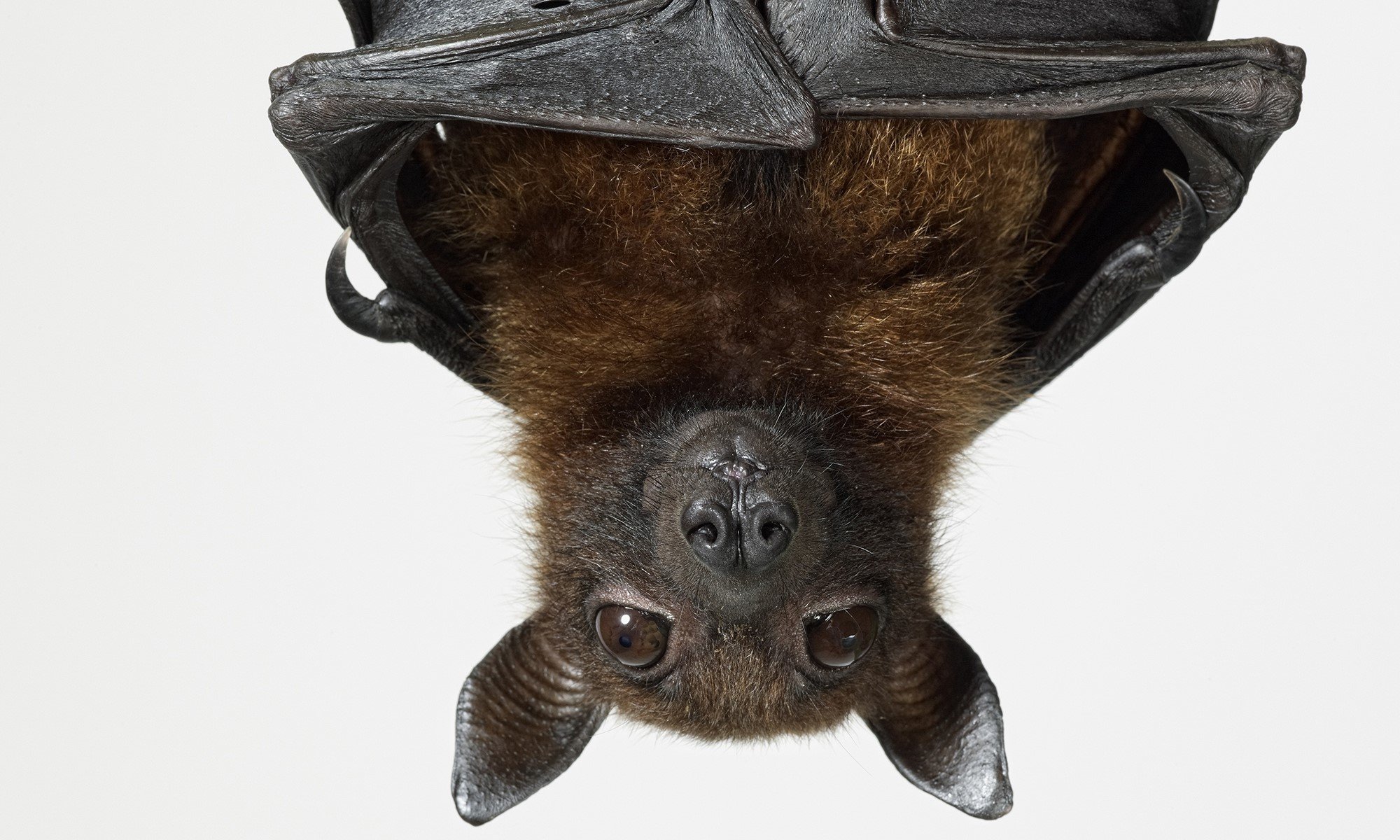
Bats can hear frequencies between 20 Hz and 120,000 Hz. Humans can hear between 20 Hz and 20,000 Hz. Dogs can hear between 40 Hz and 60,000 Hz.
Bat droppings, called guano, are one of the richest fertilizers. Bat guano was once a big business. Guano was Texas’s largest mineral export before oil! During the U.S. civil war, bat droppings were used to make gunpowder.
Bat wings are made from finger bones covered by thin layers of skin. The wing membranes of a bat make up about 95% of its body surface area. A bat’s wing membrane helps the bat regulate body temperature, blood pressure, water balance, and gas exchange.
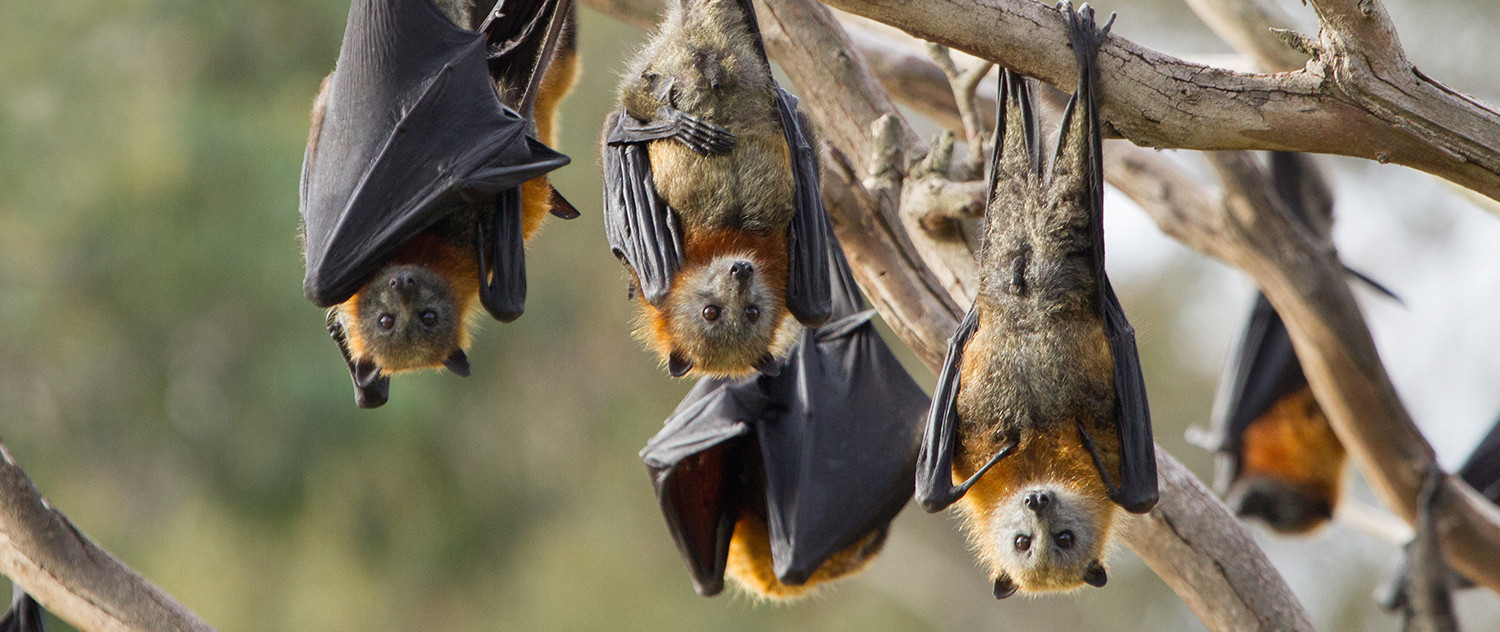
A bat uses 30-60 days of stored energy to wake up out of hibernation. That is why it is so important to not disturb hibernating bats.
Bats make up a quarter of all mammals found on earth.
Scientists in several countries are trying to copy the enzymes found in vampire bat saliva to treat heart conditions and stop the effects of strokes in humans.
Bats have an extraordinary long lifespan for their size- they are known to live to around 20 years, and at least one brown bat was documented to have lived 30 years.
Bats can find their food in total darkness. They locate insects by emitting inaudible high-pitched sounds, 10-20 beeps per second and listening to echoes.
More than half of the bat species in the United States are in severe decline or listed as endangered. In addition to loss of habitat, one of the direst threats comes from white nose syndrome, a disease that has decimated bats in the U.S. and Canada. The Nature Conservancy collaborated in a recent breakthrough, successfully treating and releasing infected bats.
Most bats have only one pup a year, making them extremely vulnerable to extinction. Bat mothers can find their babies among thousands or millions of other bats by their unique voices and scents.
The world’s largest bat is the “flying fox” that lives on islands in the South Pacific. It has a wingspan of up to 6 feet. The world’s smallest bat is the bumblebee bat of Thailand, which is smaller than a thumbnail and weighs less than a penny.

More than 300 species of plants depend on bats to survive in many tropical and desert ecosystems. These include plants that humans eat, like the agave used to make tequila, as well as banana, peach, and mango trees.
To survive the winter some species of bat migrate, others hibernate, and yet others go into torpor (regulated hypothermia that can last from a few hours to a few months)
The bat has a very long tongue that it uses for feeding and pollination. When not in use the tongue is wound up around the rib cage.

 Sew Colorful
Ah! Bats! I’ve had a couple get into my house via my attic when I had my smoke detector down. I needed to replace the battery but couldn’t figure out how to change it, so until I found out, I just left that small hole open. Who knew bats could squeeze thru such a tiny hole???? I’m not fond of them at all but I don’t panic, altho I will admit to a rise in my BP!! Jake didn’t quite know what to think about this thing flying around in my bedroom. I turned all of the inside lights on and opened the garage door and then the interior door to the garage, where it was dark. Then I took a towel and kind of chased it out. Happened twice so I found out how to replace that battery right quick!
Another story about bats…..when I first married HB’s Dad, we were living in a TH in Arlington and rented a room to a friend of ours, who was PETRIFIED of bats. Hubby and I rigged up a wire from his door to the far corner of his room on an angle, tied a couple of black socks together, and placed them over the high end of the wire. When he opened his door, it pulled the wire and the socks slid down toward him. HE ABSOLUTELY FREAKED!!! Best trick EVAH!!!! ROFLMAO
LikeLike
Dr. Ryan Cole describes an “alarming” uptick in cancers and immune system responses in the past year. Based on both scientific data and anecdotal observations, Cole says scientists are “seeing an alteration of the innate immune response,” which he says is very concerning. He says the uptick in these strange immune responses coincides with the rollouts of vaccines against COVID-19 in the population.
“We’re seeing an alteration of the innate immune response,” says pathologist Dr. Ryan Cole, founder of Cole Diagnostics. In recent months, Dr. Cole said he started seeing a number of disturbing trends under the microscope: the appearance of a childhood disease in adults and an uptick in rare cancers. Other doctors have echoed his observations, he says, but rigorous studies are not being conducted.
“You cannot find that for which you do not look,” he says.
We also take a look at what factors impact how an individual fares with COVID-19. America has a vitamin D crisis, which is essential to a functioning immune system, Dr. Cole says. “This is a public health message that is so critical, because so goes your vitamin D level, so goes your overall ability to fight off not just COVID, but any virus in any viral season.”
https://rumble.com/vwvq3m-dr.-ryan-cole-covid-19-vaccines-causing-an-alarming-uptick-in-cancers.html
LikeLike
This article backs it up, with another video:
EXCERPT: “STORY AT-A-GLANCE
– Analysis of U.S. Morbidity and Mortality Weekly Report (MMWR) data suggests the U.S. Centers for Disease Control and Prevention has been filtering and redesignating cancer deaths as COVID deaths since April 2021 to eliminate the cancer signal
– The signal is being hidden by swapping the underlying cause of death with main cause of death
– Uncontrollable turbo-charged cancers the medical establishment had never seen before only started to occur after the rollout of the COVID jabs
– Before it was manipulated to eliminate the safety signal, data from the Defense Medical Epidemiology Database (DMED) showed cancer rates among military personnel and their families tripled after the rollout of the shots
– After the rollout of the COVID jabs in 2021, cancer patients have gotten younger, with the largest increase occurring among 30- to 50-year-olds, tumor sizes are dramatically larger, multiple tumors in multiple organs are becoming more common, and recurrence and metastasis are increasing
In a series of Twitter posts, The Ethical Skeptic — self-described as a former intelligence officer and strategist — has laid out a series of charts illustrating how cancer deaths are being mislabeled as COVID deaths.
The suspicion is that this is an effort to hide the fact that the COVID shots have resulted in soaring cancer rates. The Ethical Skeptic also takes a deep dive into the data in “Houston, We Have a Problem, Part 1,” on TheEthicalSkeptic.com.1
As noted in his article, seven out of the 11 International Classification of Diseases (ICD) codes tracked by the U.S. National Center for Health Statistics — including cancer — saw sharp upticks starting in the first week of April 2021.”
Much more info including charts/graphs: https://americafirstreport.com/how-cancer-deaths-from-the-covid-jabs-are-being-hidden/
https://rumble.com/v1do1rb-covid-vaccination-and-turbo-cancer-pathological-evidence-with-english-subti.html
LikeLike
“I like this kid!”

“I think they sell weed!”

“How do you vote out a government that wasn’t elected?” (gif)

“You won’t vote your way out of this!”

LikeLike
LikeLiked by 1 person
LOL
LikeLiked by 1 person
Great opening as always
LikeLiked by 1 person
I expect you’ll enjoy the open I did for Marica’s on the etymology of words and phrases on 10/21. I’ll be posting it here, too, and will be doing more in the future. It’s something that truly interests me. Pat will be back soon so I have someone to “talk” to thru the day – man is it boring when she’s gone! LOL
LikeLiked by 1 person
🤣😂😘❤️
LikeLiked by 1 person